Every major industrial project relies on the humble fastener. Whether it is an airplane, a car, or a simple household appliance, bolts and screws hold our world together. But how are millions of these parts actually made every single day? If you run a high-volume manufacturing facility, you constantly look for ways to drop costs while keeping quality high. The secret behind producing massive amounts of hardware quickly and strongly lies in the cold heading process. This comprehensive guide explores the massive advantages of cold heading, how it compares to standard machining, and why understanding the link between cold heading and cold forming will revolutionize your production line.
What is the cold heading process in fastener manufacturing?
The cold heading process is a highly efficient metal forming process that shapes metal at room temperature. Instead of melting the material or cutting it away to form a fastener, this process uses immense pressure to change the geometry of the raw material. Also called cold forming, this method is brilliant in its mechanical simplicity and incredible speed.
The process begins with a massive continuous coil of metal wire. This wire is fed directly into a machine. The machine shears the wire into a precise, small piece called a slug. Once the slug is cut, it is quickly transferred to a die. Here, a hammer strikes the metal with tremendous force.
This impact forces the metal to fill the empty space within a die. The cold heading process creates the basic shape of the part instantly. Because it shapes the metal while it is cold, it requires robust, high-quality tooling. It is typically used for high-volume fastener manufacturing where speed and consistency are everything.
If you walk into a traditional machine shop, you will see a screw machine or a CNC lathe spinning a piece of metal while a cutting tool strips away chips to reveal the final product. This traditional production method creates significant material waste. In contrast, cold forming or cold working pushes and molds the material into the desired shape rather than cutting it.
This means raw material waste is practically zero. Because the metal is not heated or machined away, the amount of material you start with is the exact amount you end up with. You simply rearrange the volume of the slug.
By moving the metal instead of removing it, the manufacturing process becomes extremely efficient. A traditional screw machine might take a minute to cut a complex part. A cold heading machine can stamp out hundreds of the exact same part in that same minute. When you compare the two, the differences in speed and scrap are staggering.
What are the key advantages of cold heading for your business?
When evaluating different manufacturing methods, the bottom line always matters. The advantages of cold heading are clear and directly impact your profitability. First, you see massive cost savings. Because there is no scrap to sweep off the floor, your overall material costs plummet. You buy only the metal you actually sell to your customer.
Second, cold heading is more efficient than methods such as hot forging because you do not spend massive amounts of energy heating the metal in furnaces before striking it. The process requires high-impact force, but the cycle times are incredibly short. This drops your daily production costs significantly.
Third, cold heading offers incredible structural benefits. When you cut metal, you sever its internal grain lines. This creates weak points. However, using cold heading aligns and compresses the material’s grains. This results in an uninterrupted grain flow, which drastically improves the strength and durability of the fastener.
Why is choosing cold heading better for your assembly line?
Choosing cold heading means you can often achieve a perfect near net shape or even a completely finished near net part immediately as it drops out of the machine. You get a ready-to-use part without secondary operations holding up your shipping schedule.
Consider a multi-piece part that usually requires welding and assembly. A clever engineer can often redesign that assembly into a single, solid piece. Using cold heading, you can bump out a flange, sink a hole, and shape a head all in one continuous strike.
Eliminating assembly steps saves time, reduces labor, and removes points of failure. The single, cold headed piece will always be stronger than two pieces welded together. This makes the final product vastly superior for demanding industries like aerospace and automotive.
How does a cold heading machine operate?
The heart of the operation is the cold heading equipment. These are massive, heavy-duty machines built to deliver tons of force repeatedly without vibrating apart. The steps involved in the process are a marvel of mechanical timing.
Once the metal wire is fed and cut into a slug, mechanical fingers grab the piece and move it into the main forming station. Here, powerful hammers and dies go to work. The machine drives a punch into the slug, trapping it in the die. To reach the final complex geometry, the machine may require multiple blows.
Modern progressive headers can have five or six stations. The part moves rapidly from one station to the next. The first hammer blow might just gather the metal, the second might shape the head, and the third might flatten it. Because they cycle so fast, cold heading machines can produce large quantities of parts in a single shift, making them indispensable for global supply chains.
What role does extrusion play in the manufacturing process?
You cannot talk about forming metal without discussing extrusion. In this context, extrusion is a technique used to form the body or the cavity of the fastener. There are two main types used daily on the shop floor.
- Forward Extrusions: The machine forces the metal through a smaller opening. This reduces the diameter of the slug while simultaneously increasing its length. It is perfect for making the long shank of a bolt.
- Backward Extrusion: This is slightly different. The die or punch insert is pushed directly into the solid metal to create a hole. As the punch enters, it forces the material to flow backwards, up and around the outside of the descending tool.
Backward extrusion is commonly used to create a deep hole or cavity, like the socket in an Allen head screw or the hollow center of a tubular rivet. Mastering these extrusion techniques is what allows manufacturers to create highly complex geometries out of solid wire.

How do secondary operations fit into cold headed manufacturing?
While the goal is always to drop a finished part straight from the machine, some designs simply require secondary operations. Cold headed manufacturing is incredibly versatile, but it cannot do everything inside the primary die.
For example, a cold headed blank often needs threads. While some advanced machines roll threads in-line, many parts are moved to a separate thread rolling machine. Additionally, fasteners may need undercuts, precise cross-holes, or tight-tolerance grooves that the heading process cannot form perfectly.
This is where the need for secondary machining steps comes in. After the heavy lifting is done by the machine, light CNC turning or drilling finishes the job. Even when parts require multiple steps, the overall cost remains lower because the bulk of the material removal was eliminated in the first stage. To ensure these secondary cuts are clean, manufacturers rely on high-quality tools, like the Carbide Drills we produce at Drillstar, to handle the tough, work-hardened metal.
A common misconception is that you can only form softer metals like aluminum, brass, or low-carbon steel. While soft materials certainly flow easier, modern cold heading and cold forming technology handles much tougher stuff.
Today, it is very common to form stainless steel. Whether it is a 300-series stainless or a tough 400-series, the process handles it. We even see aerospace companies forming high-temperature alloy materials, including nickel-based superalloys. However, working with harder metals generates immense tool pressure.
To successfully force the material into shape without shattering the die, the manufacturer needs exceptional Extrusion Die setups. The tooling must be harder than the workpiece. This is why materials like tungsten carbide are heavily used in cold heading tool inserts. If the material is simply too hard to shape at room temperature, the manufacturer might switch to forging at elevated temperatures, but cold forming remains the first choice whenever possible.
What types of cold headed products are typically made?
The sheer variety of cold headed products on the market is astounding. If you look around, you will see them everywhere.
Cold heading produces everything from simple fasteners like standard hex bolts, screws, and rivets, to highly specialized fasteners used in surgical implants. Any solid metal part with a head on one end and a shaft on the other is a prime candidate.
We see different head shapes customized for specific torque requirements, unique shoulder bolts for precise pivoting, and internally threaded nuts. Every type of fastener you can imagine is likely a product of this method. Beyond fasteners, cold headed fasteners and non-threaded cold headed parts like spark plug bodies, wheel studs, and engine pushrods are heavily used in manufacturing globally.
| Feature | Machining (Screw Machine) | Cold Heading |
| Material Waste | High (Up to 60%) | Low (Under 5%) |
| Production Speed | Slower | Extremely Fast |
| Part Strength | Lower (Cut grain lines) | Higher (Continuous grain structure) |
| Tooling Cost | Lower initial cost | Higher initial cost |
| Best Volume | Low to Medium | Very High |
How do cold-headed parts compare to screw machine components?
When deciding how to make a part, buyers often weigh cold-headed parts against components made on a screw machine. Both have their place, but the comparison usually comes down to volume, strength, and tolerance.
As mentioned earlier, the continuous grain flow gives the cold-formed part superior fatigue resistance. When a fastener is put under tension, you want those internal grains wrapping around the head, not cut right through it.
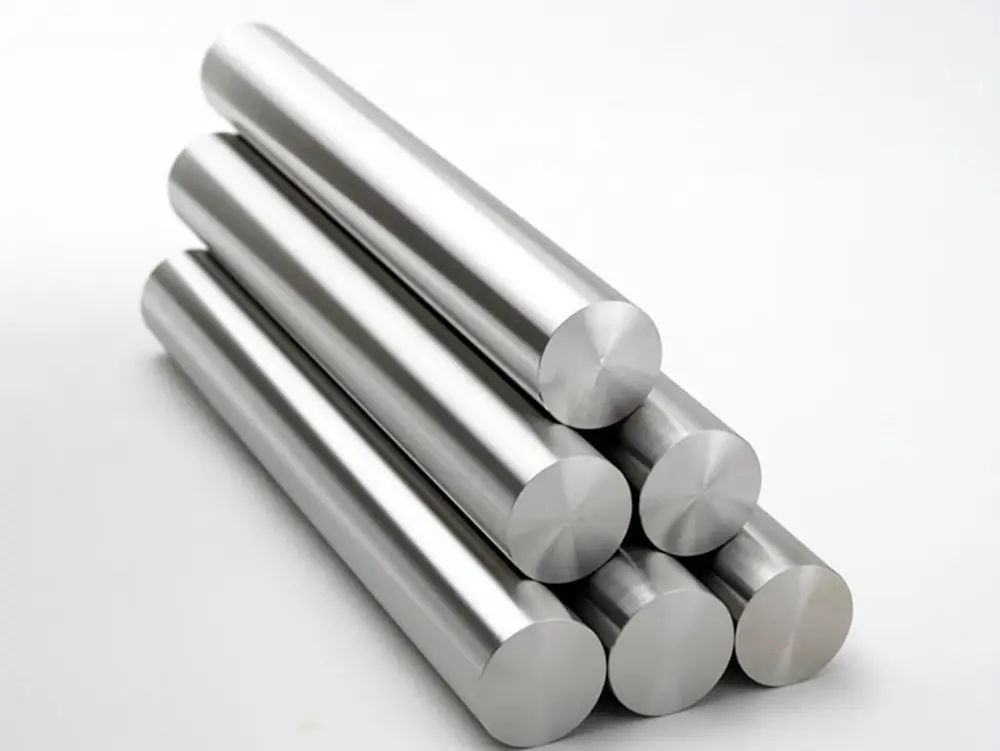
Machining is excellent for hitting a microscopic tolerance on a short run of parts. However, cold forming tooling has advanced significantly. With precision Carbide Strips and tough Stellite Hot Forging Die inserts supporting the process, dimensional accuracy in cold forming is better than ever. For massive production runs, the speed, strength, and lack of waste make the heading process the undisputed champion.
Summary: Key Takeaways on the Fastener Revolution
Understanding how your hardware is made helps you make better purchasing and design decisions. Here is a quick wrap-up of what you need to remember about this powerful industrial process:
- Zero Waste: The process shapes metal by pushing it, drastically reducing raw material waste compared to cutting.
- Superior Strength: It creates an uninterrupted grain flow, making the final part much stronger and more resistant to fatigue.
- High Speed: These machines can punch out hundreds of parts per minute, lowering overall production costs.
- Design Flexibility: Modern techniques can combine multiple assembly pieces into one solid, near-net shape component.
- Material Range: While excellent for soft metals, advanced carbide tooling allows for the forming of tough stainless and alloy materials.
- Efficiency: It provides massive cost savings for large-volume runs, making it the most efficient way to manufacture the world’s fasteners.