In the world of precision manufacturing, the humble drill is often taken for granted. Yet, as someone who runs a facility producing high-end cutting tools at Dezhou Drillstar, I know that the drill is the unsung hero of the workshop. Whether you are a distributor stocking shelves in Chicago or a machinist in a high-tech aerospace plant, understanding the different drill geometries and materials is crucial. The wrong type of drill bit can ruin a workpiece, damage the drill machine, or simply waste valuable time.
This guide is designed to navigate the complex landscape of drill bit types. We will explore everything from the standard twist drill to specialized cutter drill bits. We will discuss different materials, from soft pine to hardened steel, and help you understand why a cobalt drill bit might be worth the extra cost over a standard HSS drill bit. By the end, you will know exactly how to choose the right drill bit for any application, ensuring efficiency and precision in every drill operation.
What makes the Twist Drill Bit the most common drill in the world?
When most people think of a drill, they picture the twist drill bit. These drill bits are the most common type found in every toolbox, from a homeowner’s kit to a professional bit set. A twist drill bit is characterized by its spiral flutes, which run down the length of the drill bit. These flutes are essential; they lift debris and chips out of the hole as the drill spins.
Twist drill bits are typically made from High-Speed Steel (HSS). The HSS drill bit is versatile and cost-effective. However, not all twist drill bits are similar. The angle of the drill bit point matters. A standard 118-degree point is great for wood and soft metals, while a flatter 135-degree split point is designed to drill into metal without “walking” or slipping across the surface. This prevents the need to drill a pilot hole before the main drill operation.
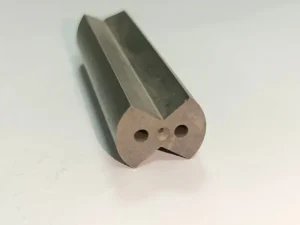
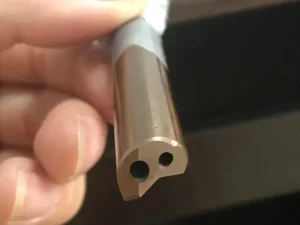
For industrial applications, we often move beyond standard HSS. We use solid carbide rods to manufacture high-performance twist drills. A carbide drill offers superior rigidity and heat resistance, allowing you to drill faster and longer. Drill bits are designed with specific geometries for specific materials. If you are using a common drill bit on hardened steel and it smokes, you are using the wrong type of bit.
How do Masonry Drill Bits handle concrete and stone?
If you try to drill into a concrete wall with a standard metal drill, you will destroy the bit in seconds. This is where the masonry drill bit comes into play. A masonry drill bit is designed differently. It typically features a wide, arrow-shaped carbide tip brazed onto a steel shaft. This drill bit is a cutting tool that works by pulverizing the material rather than slicing it.
Masonry bits are almost always used with hammer drills. The drill machine delivers a rapid pounding action (percussion) while spinning. This hammers the carbide tip into the stone or concrete, breaking it up, while the flutes remove the dust. If you use a masonry drill bit in a standard rotary drill without the hammer function, progress will be agonizingly slow.
At Drillstar, we understand that the brazing quality of the carbide tip is critical. If the bond fails, the tip snaps off, and the drill is useless. Different drill manufacturers use different grades of carbide. For professional construction, a masonry drill bit must withstand extreme heat and impact. Whether you need to drill holes for anchors or run conduit through a wall, the masonry drill bit is the only bit to use.
Have you ever tried to drill into sheet metal with a large twist drill? It often grabs the metal, spinning the sheet dangerously, or leaves a jagged, ugly hole. The solution is the step drill bit. Step drill bits look like a cone with stair-steps ground into the side. These drill bits have a cone-shaped profile that allows you to drill holes of multiple sizes with a single bit.
Step drill bits are self-centering. You can start a hole and then push the drill deeper to enlarge it to the next “step” size. They are fantastic for electrical work where you need to drill knockouts in panels. One of the huge advantages is that they deburr the hole as they cut. As the drill passes to the next step, the angled transition chamfers the edge of the previous hole size.
These bits are made usually from HSS or Cobalt. Because they engage a lot of material, heat buildup is a concern. It is crucial to use cutting fluid when you drill into metal with a step drill. They allow you to drill clean, round holes in thin materials where a twist drill would tear the metal.
What is the specific purpose of Wood Drill Bits like Brad Point and Auger?
While you can use a twist drill on wood, specific wood drill bits provide a much cleaner finish. The most common is the Brad Point bit. Unlike the angled tip of a metal drill, a Brad Point has a sharp center spur. You position the bit exactly where you want the hole, and the spur anchors the drill before the cutting edges engage. This prevents the drill from wandering and cuts a clean circumference.
For deep holes, auger drill bits are the standard. An auger drill bit has a screw tip at the very front. When you start the drill, this screw pulls the bit into the wood. You don’t need to push hard; the drill does the work. These bits can also have wide, deep flutes to clear the massive amount of chips generated when you drill deep into heavy timber.
Drill bits for wood are designed to sever wood fibers cleanly. If you use a dull metal drill, it tears the fibers, leaving a rough entry and exit hole. Auger drill bits and Brad Point bits ensure that the “entry wound” of the drill is crisp and professional.
When should you use a Spade Drill Bit or Forstner Bit?
Sometimes you need to drill a hole that is large in diameter but not necessarily deep. Spade drill bits, also known as flat drill bits, are the economical choice. A spade drill bit is essentially a flat piece of steel with a center point and two cutting wings. They are fast and aggressive. They throw a lot of chips and are perfect for rough construction, like drilling through studs for wiring. However, the exit hole from a spade drill bit can be splintery.
For fine woodworking, specifically cabinet making, Forstner drill bits are the superior choice. A Forstner drill bit is guided by the rim, not just the center point. This allows you to drill overlapping holes or drill at an angle. Most importantly, Forstner drill bits leave a perfectly flat bottom hole. This is essential for installing European-style cabinet hinges.
While spade drill bits are about speed, Forstner drill bits are about precision. You typically use Forstner bits in drill presses to control the depth and angle accurately. They generate significant friction, so you often need to pull the bit back to let it cool and clear chips during the drill process.
How do Tile and Glass Drill Bits prevent cracking in fragile materials?
Drilling into glass or ceramic tile is terrifying for a beginner. One wrong move and the workpiece shatters. A standard masonry drill bit is too aggressive. You need a specialized glass drill bit or tile drill bit.
The most common design is the spear-point tile drill bit. It looks like a small spade made of carbide. It scrapes away the material rather than chipping it. For harder porcelain or thick glass, a diamond tile drill is required. These drill bits include industrial diamond dust embedded in the tip. They grind through the material.
When using a glass drill bit, heat is the enemy. You must use water to keep the bit and the glass cool. If the glass gets too hot, it will crack from thermal shock. Also, low speed is key. High-speed drill rotation will only burn the bit. Drill bits are compatible with standard drill chucks, but the technique requires patience. You position the bit, apply light pressure, and let the diamond do the work.
What is the difference between Countersink Drill Bits and Plug Cutters?
In joinery, you often want the screw head to sit flush with or below the surface of the wood. Countersink drill bits are designed to do two jobs at once: they drill a pilot hole for the screw shank and create a conical recess for the screw head. This ensures the screw drives in straight and doesn’t split the wood.
A countersink drill usually consists of a standard twist drill inside a conical cutter. You can adjust the depth of the drill to match the screw length.
If you want to hide the screw completely, you use a plug cutter drill. A plug cutter drill doesn’t drill a hole; it cuts a small wooden cylinder (a plug) from a scrap piece of wood. You glue this plug into the hole over the sunken screw head. When the grain matches, the screw becomes invisible. Countersink drill bits and plug cutters are best friends in fine furniture making.
Why are Hole Saw Drill attachments used for large diameter holes?
When you need a hole larger than an inch or two—say, for a door lock or a dryer vent—a standard twist drill or spade drill is impractical. Enter the hole saw drill. A hole saw drill is technically a ring-shaped saw blade attached to a central pilot drill.
The pilot drill anchors the saw, and the ring cuts the perimeter. Because you are only cutting the edge and not turning the entire volume of material into chips, a hole saw drill can cut very large holes with relatively low power. However, once you drill through wood or metal, you are left with a solid “core” or plug inside the cup of the saw. You need to pull the bit out and pry this core loose.
Hole saw drill bits come in various materials. Bi-metal hole saws are great for metal and wood with nails. Carbide-tipped hole saws are used for fiberglass and abrasive materials. They are a vital part of any drill bit set for general contractors.
How do materials like Cobalt and Carbide affect the Drill Bit?
The type of drill bit geometry is important, but the material the bit is made of is equally critical. As a manufacturer, we deal with Nickel-Based Wrought Superalloys and other tough materials, so we know that standard steel won’t cut it.
- HSS (High-Speed Steel): The standard. Good for wood, plastic, and soft metals.
- Cobalt Drill Bits: These are HSS with 5-8% cobalt added. Cobalt drill bits are much harder and have higher heat resistance. They are the right drill bit for stainless steel and cast iron.
- Carbide: Solid carbide or carbide-tipped. These are the hardest drill bits available. They stay sharp longer than any other material types. However, they are brittle. If you drop a carbide drill on concrete, it might shatter. They are best used in rigid drill presses or CNC machines.
When you drill into metal, heat destroys the temper of the drill bit. Cobalt and carbide maintain their hardness at high temperatures, which is why drill bits for metal in industrial settings are rarely just plain HSS.
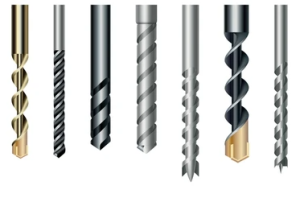
How to choose the right Drill Bit Set for your workshop?
Walking into a hardware store, you will see row after row of drill bit sets. How do you choose? A drill bit set is an investment.
- Assess your needs: Do you mostly drill wood? A set of Brad Point bits is better than a generic “black oxide” set. Do you fix cars? You need a drill bit set that includes metric sizes and perhaps cobalt drill bits.
- Look for versatility: Multi-purpose drill bits are gaining popularity. These bits can be used to drill through wood, masonry, and light metal. They utilize a carbide tip with a unique grind. They are great for installers who encounter different materials on one job site.
- Don’t forget the drivers: A modern bit set often includes screwdriver bits and nut drivers. Having your driver bits organized alongside your drill bits saves time.
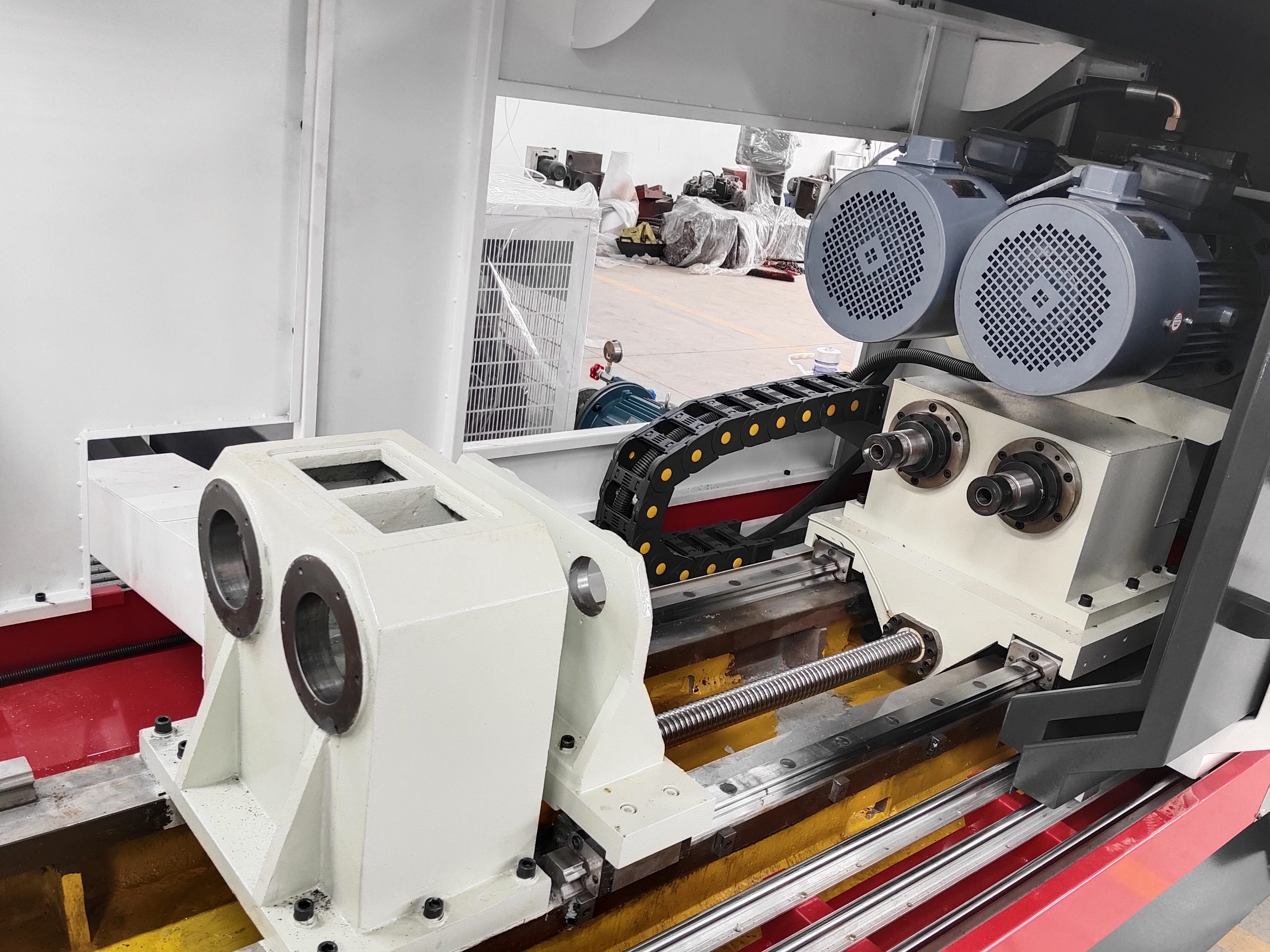
- Quality over quantity: A massive drill bit set with 200 pieces for $20 is likely made of soft steel. It is better to buy a smaller bit set of high-quality HSS or Cobalt that you can sharpen. At Drillstar, we even offer Drill Bit Grinding Machine solutions because we know a sharp drill is a safe drill.
Summary: Selecting the Perfect Drill Bit
The drill is a tool of infinite utility, but only if you pair it with the correct drill bit. Here is a quick recap to ensure you always grab the right drill bit:
- Twist Drill Bit: The general-purpose hero. Use 135-degree split points for metal to prevent walking.
- Masonry Drill Bit: Essential for concrete. Must be used with a hammer drill.
- Wood Drill Bit: Brad point for precision, Auger for depth, Spade for speed.
- Step Drill Bits: The best choice for thin sheet metal and electrical boxes.
- Specialty Bits: Use tile drill bits or glass drill bits with water cooling for fragile materials.
- Material Matters: Upgrade to cobalt drill bits for stainless steel. Use carbide for production environments.
- Organization: A good drill bit set keeps your sizes sorted and protects the cutting edges.
Whether you are looking for Carbide Drills for a CNC machine or just need to hang a picture frame, understanding drill bit types empowers you to work smarter. The drill is only the engine; the bit is a cutting tool that does the real work. Treat it with respect, choose wisely, and your holes will be straight, clean, and true every time.