Deep hole machining is a core process in the mechanical manufacturing industry, and its machining accuracy and efficiency are highly correlated with tool performance. As a key tool for deep hole machining, welded gun drills have become a universal core processing tool across various industries due to their strong adaptability and wide machining range. To help manufacturing enterprises select models accurately and use them in a standardized manner, a comprehensive analysis of the structure, types, model selection and application points of welded gun drills is now presented in accordance with industry technical standards, providing professional references for industrial applications.
Modular Structural Design, Laying a Solid Foundation for Machining
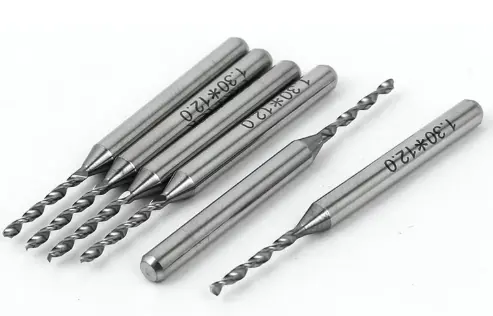
Welded gun drills adopt a modular design, consisting of three parts: carbide cutting heads, alloy steel pipe shanks and alloy steel tool holders. All components work in synergy to ensure the rigidity and cutting performance of the tools, providing fundamental support for various deep hole machining scenarios.
Multi-type Guide Strip Layout, Precisely Matching Machining Requirements
The guide strip layout is the core design of welded gun drills for adapting to different machining requirements. Classified into three categories according to measurement characteristics, machining materials and scenarios, each subdivided model is targeted to meet different machining requirements, with a clear direction for model selection:
- Non-measurable industry universal type: Type G is suitable for all materials and almost all machining occasions, the first choice for high dimensional accuracy machining with the lowest torsional deformation; Type S is mainly for short hole machining of steel workpieces and can achieve perfect surface quality.
- Non-directly measurable asymmetric type: Type E is suitable for all materials and low dimensional accuracy occasions, especially for plastic material machining; Type EA is the recommended model for cross-hole machining and can also be used for machining scenarios of drilling in/out from inclined planes.
- Directly measurable symmetric type: Type A is specially designed for high-precision machining of aluminum workpieces; Type C focuses on difficult-to-machine materials such as stainless steel; Type D is suitable for high-precision machining of gray cast iron and ductile iron; Type EM is applicable for the machining of soft materials such as steel and cast iron.
Rich Tool Holder Configurations, Adapting to Single/Multi-spindle Machining
Welded gun drills are equipped with a variety of tool holder structures and specifications to fully meet the different installation and commissioning requirements of single-spindle and multi-spindle machining:
- Fixing methods: Three types are available, including round shank (expansion sleeve type), side clamping (screw type) and inclined side clamping (screw type), adapting to the connection requirements of different equipment.
- Specification coverage: The diameter specifications cover a full range of metric sizes (6mm, 10mm, 12mm, 16mm, 20mm, 25mm, 32mm, 40mm) and inch sizes (12.7mm, 19.05mm, 25.4mm, 31.7mm, 38.1mm).
- Multi-spindle special type: Divided into two types: external equipment adjustment and on-machine adjustment, equipped with corresponding thread and dimension parameters to adapt to the operation of multi-spindle machining equipment.
- Connection methods: Three types are classified according to the difference between the tool holder diameter and the nominal size of the cutting head, namely standard type, with boss type, and with flange and boss type, ensuring the stability of the connection between the tool holder and the drill rod.
Diverse Tool Types, Meeting Personalized Machining Needs
Based on conventional welded gun drills, a variety of special types and upgraded categories have been derived, covering all types of machining scenarios such as small diameter, special processes and large aperture, providing diversified solutions:
- Solid carbide gun drills: The drill bit and drill rod are made of a single piece of carbide, featuring good rigidity and low torsional vibration, suitable for small diameter machining of 0.7-10mm with the machining depth not recommended to exceed 300mm. It includes solid drills, step drills, reaming tools and other types, with higher requirements for the coaxial accuracy of machine tools.
- Special welded tools: Including single-edge boring tools (internal cooling, front external chip removal, with integral round pipe shanks), gun drill trepanning tools (internal cooling, rear external chip removal, suitable for special processes such as core retention and weight reduction), and reaming drills with front guide (recommended for stepped holes formed by pilot holes and reaming with high coaxial accuracy requirements).
- Insert type (clamped type) gun drills: Different station structures are designed according to aperture sizes. Single-insert single-station is suitable for 10-12mm apertures, single-insert double/three-station for 12-40mm apertures, and three-insert double-station for apertures above 30mm.
Standardized Resharpening and Angles, Ensuring Machining Accuracy
Tool resharpening and angle design directly affect machining accuracy and service life. Welded gun drills have formulated a full set of standardized specifications while supporting personalized customization:
- Resharpening requirements: Welded tools require mandatory resharpening. For resharpening equipment, the grinding head moving type sharpener is preferred (the tool is fixed to ensure the resharpening accuracy of long tools). Special resharpening devices can also be used with tool grinders provided by customers. The conventional resharpening range is 5mm-32mm.
- Resharpening design: Equipped with a standard head resharpening scheme and can be customized according to special requirements. Structures such as enlarged coolant channels, chip breakers and chip guide steps can be designed to improve chip removal and cooling effects.
- Angle adaptation: Exclusive angle recommendation standards are formulated for different machining objects such as brittle materials, soft materials, low/middle alloy steel, stainless steel, hard nickel cast iron and laminated workpieces. Precise matching is made from external angle, internal angle, drill tip position to coolant clearance angle to maximize cutting performance.
Scientific Application Parameters, Prolonging Tool Service Life
In practical application, scientific machining parameters and usage specifications are the key to ensuring tool service life and machining effects, and multiple aspects of control are required:
- Coolant management: The coolant flow and pressure must match the tool diameter, and the pressure parameters of drilling oil and emulsion shall be adjusted accordingly with the change of diameter. At the same time, the temperature and filtration management of cutting fluid shall be well done to avoid the impact of excessively high temperature and substandard filtration on machining.
- Machining parameter adaptation: The cutting speed and feed rate shall be adjusted according to the tool diameter and machining materials. Different materials such as aluminum alloy, structural steel, cast iron and stainless steel correspond to different cutting speed ranges, and the feed rate shall be reasonably planned with the change of tool diameter.
- Avoiding influencing factors: The tool service life is affected by ten factors, including excessive tool protrusion, poor machine tool accuracy, incorrect geometric shape, inappropriate cutting fluid pressure, excessively high cutting linear speed and excessive feed rate. During use, equipment commissioning and parameter optimization shall be well done to avoid various problems.
This comprehensive technical analysis of welded gun drills systematically sorts out the core contents such as structural design, type selection, resharpening specifications and application points, providing professional and comprehensive technical references for manufacturing enterprises in tool selection, operation specification and efficiency improvement in the deep hole machining process. In the future, with the continuous development of deep hole machining technology, welded gun drills will continue to make efforts in structural optimization, category expansion and performance upgrading, better adapt to the high-precision and high-efficiency machining requirements of various industries, and inject core impetus into the high-quality development of the mechanical manufacturing industry.