A deep hole tool is a specialized cutting tool for machining deep holes with a depth-to-diameter ratio (D/D ratio) greater than 10:1. Due to its unique chip removal and cooling designs (such as gun drills, BTA tools, and jet drilling tools), it ensures extremely high hole position accuracy, straightness, and surface finish.
This is one of the most widespread and demanding applications of deep hole tools.
Oil Drill Collars and Drill Pipes: Drill collars are heavy-duty components connecting the drill bit, and their internal structure needs to be drilled through to circulate drilling fluid. Deep hole tools are used to machine deep holes inside the drill collars, typically with large diameters and extremely deep depths (up to several meters), requiring extremely high straightness to ensure smooth drilling fluid circulation.
Oil/Gas Pipelines: Used for machining butt joints or deep holes in ultra-thick-walled pipelines.
Hydraulic Cylinders: Giant hydraulic cylinders used in large hydropower stations and pumping stations require precision deep-hole machining of their inner walls to ensure piston movement accuracy and sealing performance, which is achieved by deep hole tools.
Valve Bodies and Nozzles: Various valve bodies and nozzles used in petrochemical equipment to control fluids often require the machining of dense, deep-hole flow channels, for which deep hole tools are essential.
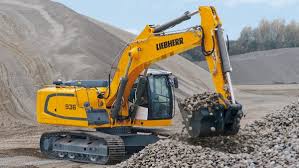
Hydraulic Supports and Piston Rods: The "arms" of excavators, cranes, bulldozers, and other equipment rely on hydraulic systems for movement. Deep hole tools are used to machine the inner holes of these hydraulic supports, requiring extremely low surface roughness (mirror finish) to reduce friction and leakage.
Large Crankshafts and Connecting Rods: Crankshaft lubrication holes are typically deep, angled or cross-holes. Deep hole tools, combined with five-axis linkage machining equipment, can perform high-precision angled deep-hole machining.
Track Plates and Pins: Some large track pins require internal drilling to reduce weight or serve as oil passages, which is accomplished by deep hole tools.
Engineering machinery typically operates under heavy loads and high pressures; the quality of core components directly affects equipment safety. Deep hole tools play a key role in machining these core components.
The automotive industry prioritizes lightweight design and high efficiency, making deep hole tools indispensable in engine and transmission manufacturing.
Engine Block and Cylinder Head: Engines contain extremely complex cooling water and lubrication channels, often consisting of very small diameter (a few millimeters) but very deep holes. Deep hole tools (especially gun drills) can efficiently machine these micro-holes.
Camshafts and Crankshafts: Deep hole tools are used for machining lubrication holes, ensuring lubrication during high-speed engine operation.
Half Shafts and Driveshafts: Hollow shaft design is a trend in automotive lightweighting. Deep hole tools are used to machine solid bar stock into hollow shafts, reducing weight while maintaining strength.
Fuel Injectors: Diesel engine fuel injectors have ultra-deep micro-holes, requiring extremely high machining precision that is achieved by specialized deep hole tools.
Aircraft Landing Gear: Landing gear struts are typically made of high-strength alloy steel, requiring extremely deep internal bores for hydraulic channels, and must be free of any cracks. Deep hole tools are critical for achieving this high-quality machining.
Turbine Engine Blades and Casings: For heat dissipation, turbine blades are designed with complex serpentine cooling holes. Deep hole tools are used to machine these micro-holes located in high-temperature alloys.
Hydraulic Lines and Structural Components: Deep hole tools are applied to machine various hollow piston rods and hydraulic conduits in aircraft control systems.
This field places extremely stringent demands on the machinability of materials (such as titanium alloys and high-temperature alloys) and machining precision, making high-performance deep hole tools a necessity.
With the development of mold cooling technology, deep hole tools have become standard tools in mold factories.
Cooling Holes:
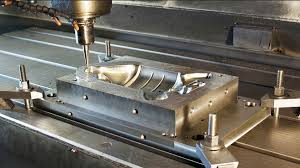
In injection molds or die-casting molds, to shorten molding cycles and prevent product deformation, dense deep holes need to be machined inside the mold as cooling channels, which is mainly done by deep hole tools.
Features:
Deep hole machining in molds typically requires work on heat-treated hardened materials, and the hole locations are irregular (any point on the X/Y/Z axes). Therefore, specialized deep hole tools are often used in conjunction with three-axis or five-axis machining equipment, sometimes paired with CNC machining centers.
Bone Screws and Plates:
Locking holes in orthopedic implants are typically deep, and precision deep hole tools are used for their machining.
Endoscopes and Catheters:
Slender medical devices require through-holes to allow wires or light to pass through, which are machined by ultra-fine deep hole tools.
Dental Drills:
Deep hole tools are used for machining the shank and internal cooling holes of drills used by dentists.
Medical device components are usually small, high-precision, and mostly made of stainless steel or titanium alloys, requiring micro-sized and high-precision deep hole tools.
The performance of weaponry often depends on the level of deep hole machining, and high-precision deep hole tools are core to this process.
Gun Barrels and Cannon Barrels: This is a typical example of deep hole machining. Not only is deep hole machining required, but subsequent rifling is also necessary (with deep hole tools modified or used in conjunction with other equipment). Absolute concentricity and straightness of the inner bore are required to ensure ballistic stability, which is guaranteed by high-precision deep hole tools.
Projectile and Missile Casings: Deep hole tools are used for machining hollow casings or internal fuse mounting holes.
Torpedo Propulsion Shafts: Specialized deep hole tools are applied to machine long shafts for underwater weapons.
Guide Rollers and Printing Plate Rollers: To achieve dynamic balance at high speeds, these long rollers typically need to be machined into hollow structures. Deep hole tools are used to machine long, narrow, deep holes, ensuring uniform wall thickness.
Equipment in these industries requires high-speed operation, placing high demands on the dynamic balance of roller components, and deep hole tools are crucial for machining hollow rollers.