Organized into five main categories: transmission system, feed system, spindle system, electrical system, and cooling/lubrication system. Fault symptoms, causes, and solutions are clearly outlined, covering common issues for both horizontal and vertical milling machines.
I. Spindle System Faults
1. Abnormal Noise and Vibration During Spindle Operation
Causes: Worn/Insufficient Lubrication of Spindle Bearings, Excessive Bearing Clearance, Roughening of Spindle Taper Hole, Loose/Worn Belt, Uneven Tool Clamping
Solutions: Add Lubricant; Adjust Bearing Clearance; Grind Taper Hole; Tighten or Replace Drive Belt; Recalibrate and Clamp Tool
2. Unstable Spindle Speed or Loss of Rotation
Causes: Worn Friction Plate Clutch, Insufficient Clamping Force, Inaccurate Gear Shift Fork Positioning, Poor Gear Meshing
Solutions: Adjust Clutch Clamping Nut; Replace Friction Plate if Severely Worn; Recalibrate Gear Shift; Inspect Gear Meshing Position
3. Spindle Stops or Cannot Rotate
Causes: Seized Drive Gear, Complete Clutch Failure, Spindle Seizure, Motor Fault
Solutions: Disconnect Power, Disassemble, Inspect and Clean Seized Parts; Replace Clutch Assembly; Inspect Spindle Fit Clearance; Inspect Motor and Wiring
4. Spindle Axial/ Large radial runout
Causes: Loose bearing lock nut, damaged bearing, worn bushing
Solutions: Retighten the lock nut; replace the damaged bearing; replace the worn bushing
II. Feed system malfunctions (manual/automatic feed)
1. Heavy and stuck manual feed
Causes: Insufficient guide rail lubrication, overly tight inserts, accumulated metal filings/debris on the guide rail, worn and stuck leadscrew nut
Solutions: Add guide rail lubricant; fine-tune the insert tightness; clean debris from the guide rail; repair and lubricate the leadscrew pair
2. Automatic feed malfunction, no tool movement
Causes: Feed clutch disengaged/damaged, feed fork misaligned, gear dislodged, travel limit block mis-triggered
Solutions: Adjust or replace the feed clutch; correct the fork position; reinstall the dislodged gear; readjust the travel limit block
3. Feed motion exhibits crawling and vibration.
Causes: Poor guide rail lubrication, uneven tension of the inserts, excessive lead screw backlash, excessive transmission chain backlash.
Solutions: Add lubricating oil; evenly adjust the inserts; adjust the lead screw nut backlash; eliminate transmission gear backlash.
4. Feed gear shifting malfunction.
Causes: Failure of the shift lever positioning spring, deformation of the shift fork, detachment of the positioning steel ball.
Solutions: Replace the spring and positioning steel ball; correct or replace the deformed shift fork.
III. Worktable and Guide Rail Faults
1. Large worktable movement clearance and inaccurate positioning.
Causes: Loose guide rail inserts, worn lead screw pair, failure of the locking mechanism.
Solutions: Gradually tighten the inserts (until smooth movement without clearance); replace the worn lead screw nut; repair the worktable locking device.
2. Worktable not locking tightly, machining displacement.
Causes: Stripped locking screws, worn locking pressure plate, excessive locking clearance.
Solutions: Replace the stripped screws; grind/replace the pressure plate; adjust the locking stroke.
IV. Electrical and Control Faults
1. 1. Motor does not start, machine does not move
Causes: Power outage, circuit breaker tripped, emergency stop button not reset, thermal relay overload protection, contactor damage
Troubleshooting: Check power supply line; reset circuit breaker; release emergency stop button; wait for thermal relay to reset, check for overload; replace damaged contactor
2. Motor overheating, frequent tripping
Causes: Long-term overload cutting, bearing seizure due to lack of lubrication, winding aging, short circuit
Troubleshooting: Reduce cutting parameters; repair motor bearings; repair motor windings; check for short circuit points
3. Button/operating handle malfunction
Causes: Button contact oxidation, loose wiring, limit switch damage
Troubleshooting: Grind contacts or replace button; tighten wiring terminals; replace faulty limit switch
V. Cooling and Lubrication System Faults
1. Cooling pump not discharging cutting fluid
Causes: Pump blockage, impeller jamming, air leak in inlet pipe, motor reverse rotation, low coolant level
Solutions: Clean metal filings and debris from the pump body and pipes; inspect the impeller; check the water pipe seal; reverse the motor phase sequence; add coolant
2. Insufficient lubrication system supply, oil circuit blockage
Causes: Oil cup/oil pipe blockage, incompatible lubricating oil viscosity, oil pump malfunction
Solutions: Unblock the oil circuit; replace with the machine tool’s specified grade of lubricating oil; inspect the lubricating oil pump
VI. Abnormal machining accuracy (indirect faults)
1. Poor workpiece surface roughness, disordered tool marks
Causes: Spindle vibration, tool wear, feed creep, large guideway clearance
Solutions: Inspect each corresponding spindle/feed fault item by item; replace with new tools
2. Dimensional tolerance out of tolerance
Causes: Large table clearance, inaccurate positioning, worn leadscrew, locking failure
Solutions: Adjust the clearance between the guide rail insert and the leadscrew; inspect the locking mechanism
General Maintenance Tips: Check lubricating oil and coolant levels before each shift and clean metal shavings from the guide rails; Always stop the machine when changing speeds or shifting gears to avoid damaging gears; Apply oil to the guide rails and leadscrews to prevent rust before long-term downtime.
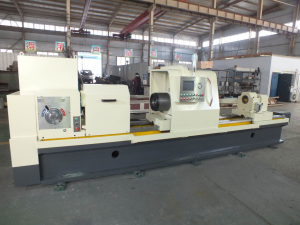
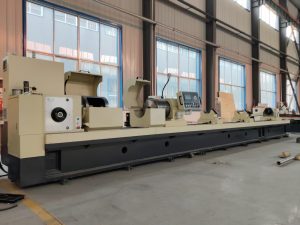
Analysis of Common Faults and Troubleshooting Methods for Deep Hole Drilling and Boring Machines
Faults in deep hole drilling and boring machines are concentrated in six main areas: spindle, feed, chip removal and cooling, hydraulics, electrical systems, and machining accuracy. The following lists the symptoms, causes, and troubleshooting methods, covering both conventional and CNC deep hole drilling and boring machines.
I. Spindle System Faults (including drill rod/boring rod)
1. Abnormal noise, excessive vibration, and drill rod shaking during spindle operation
Causes: Worn/insufficient lubrication of spindle bearings; excessive bearing clearance; thin and long drill rod with poor rigidity; worn guide sleeve; unbalanced cutting tools; chipped cutting tips; loose belt; poor coaxiality of coupling.
Solutions:
Replace spindle bearings; adjust preload clearance;
Repair or replace guide sleeves; shorten drill rod overhang;
Re-sharpen or replace cutting tools; perform dynamic balancing;
Tighten belt; correct coupling coaxiality.
2. Unstable spindle speed, loss of rotation, and excessive load
Causes: Worn gearbox gears; inaccurate shift fork positioning; slipping friction clutch; insufficient pressure; worn or roughened taper surface connecting the spindle and drill rod.
Solutions:
Inspect gearbox gears; calibrate gear positions;
Adjust clutch clamping force; replace worn friction plates;
Re-grind spindle taper hole; clean and re-clamp the drill rod.
3. Spindle not rotating, jamming, “spindle seizing”
Causes: Drive gear jamming, metal chips entering the bearing; spindle overheating and seizing; motor failure or coupling disconnection.
Solutions: Disconnect power and disassemble the machine; clean metal chips and inspect gears; Repair spindle clearance and apply forced lubrication and cooling; Inspect the motor, wiring, and coupling.
4. Drill rod/boring rod bending or breaking
Causes: Poor chip removal and blockage; excessive torque; excessive feed rate and cutting parameters; poor guidance and coaxiality; material fatigue and stress concentration.
Solutions: Optimize chip breaking and increase cooling pressure; Reduce feed rate and speed, use segmented feed (pecking drill); Calibrate the guide sleeve and ensure coaxiality between the spindle and workpiece; Replace the drill rod to avoid prolonged overloading.
II. Feed System Faults (including table, slide, and leadscrew)
1. Heavy, jammed, or creeping feed
Causes: Insufficient guide rail lubrication; excessively tight inserts; scratched guide rail surface; metal filings accumulation; worn leadscrew nut; poor lubrication; servo motor or driver malfunction.
Solutions:
Add guide rail lubricant; evenly loosen inserts;
Clean guide rails; repair scratched surfaces;
Clean leadscrew; replace grease; adjust nut clearance;
Check servo parameters and motor load.
2. Automatic feed malfunction, no feed, intermittent feed
Causes:
Feed clutch disengaged/damaged; shift fork, gear dislodged, or inaccurate positioning; erroneous triggering of travel stop/limit switch; abnormal feed signal from CNC system.
Solutions:
Adjust or replace the feed clutch;
Reinstall gears; correct shift fork position;
Readjust limit stops; check limit switches;
Check NC/PLC signals and servo driver alarms.
3. Inaccurate feed positioning, large backlash, and dimensional drift
Causes: Worn lead screw nut, excessive backlash; loose coupling; loose guide rail inserts, poor table rigidity; servo gain mismatch.
Solutions:
Adjust lead screw preload or replace the nut;
Tighten coupling, check key connections;
Tighten inserts, lock the table;
Optimize servo parameters, perform pitch compensation.
III. Chip removal and cooling system failures (most critical for deep holes)
1. Cooling pump not dispensing coolant, low flow rate, insufficient pressure
Causes: Low coolant level, clogged suction port; clogged filter; pump impeller stuck or worn; motor reverse rotation, damaged seals; pipeline leaks.
Solutions:
Add coolant, clean suction port;
Clean or replace filter;
Disassemble and inspect pump body, repair impeller;
Reverse motor phase sequence, replace seals;
Check pipeline joints, eliminate leaks. 2. Poor chip removal, chip blockage, internal chip clogging
Causes: Excessively long chips, chip breakage; worn or improperly designed chip breaker grooves; insufficient cooling pressure/flow; chip accumulation in the drill rod bore, narrow chip removal channel; workpiece end face misalignment, insufficient oil receiver clamping force.
Solutions:
Adjust cutting parameters (reduce speed, increase feed), switch to C-shaped chip breakers; Re-grind the chip breaker grooves on the cutting tools, change the cutting tool material;
Increase cooling pressure (usually 2–6 MPa), increase flow;
Clean the drill rod bore, enlarge the chip removal channel;
Smooth the workpiece end face, adjust the oil receiver clamping force.
3. Smoke, high temperature, and rapid tool wear in the machining area
Causes: Insufficient cooling or fluid interruption; poor chip removal, frictional heat generation; excessively high cutting speed, insufficient feed; incompatible tool material.
Troubleshooting:
Restore the cooling system and ensure high-pressure internal cooling;
Improve chip removal and implement segmented chip removal;
Reduce the speed and match the feed;
Replace with compatible tools (e.g., carbide, coated).
IV. Hydraulic System Faults (Clamping, Tightening, Speed Change)
1. Insufficient hydraulic pressure, weak clamping/tightening
Causes: Low oil level in the tank, deteriorated oil; clogged suction filter; worn hydraulic pump, internal leakage; excessively low pressure adjustment or stuck relief valve; internal leakage in the cylinder, damaged seals.
Troubleshooting:
Add oil, replace hydraulic oil;
Clean the filter;
Inspect or replace the hydraulic pump;
Adjust the relief valve pressure, clean the valve components;
Replace cylinder seals, repair internal leakage.
2. Excessive noise, vibration, and high oil temperature in the hydraulic system
Causes: Air leakage in the suction system, air mixed in; incompatible oil viscosity; worn pump bearings; frequent overflow of the relief valve; clogged cooler, poor heat dissipation.
Troubleshooting:
Check the oil suction pipe seal and venting;
Replace with specified grade hydraulic oil;
Inspect the hydraulic pump;
Adjust pressure and reduce overflow;
Clean the cooler and improve heat dissipation.
V. Electrical and CNC System Faults
1. Machine tool cannot start, no power, circuit breaker trips
Causes: External power failure, phase loss; emergency stop not reset; air switch/fuse overload or short circuit; thermal relay tripped; contactor/relay damaged.
Troubleshooting:
Check three-phase power supply and restore power;
Reset the emergency stop button;
Investigate short circuit points and replace fuses;
Wait for the thermal relay to reset and check the load;
Replace the damaged contactor and tighten wiring.
2. CNC system alarm, servo overload, axis drift
Causes: Servo motor overload, mechanical jamming; incorrect driver parameters, abnormal gain; dirty/damaged encoder, signal loss; incorrect system parameters, program error.
Troubleshooting:
1. Power off the rotating machine and check for mechanical jamming;
2. Restore servo parameters and optimize gain;
3. Clean or replace the encoder and check the cables;
4. Restore system parameters and correct the machining program.
VI. Machining Accuracy and Surface Quality Faults
1. Hole Diameter Out of Tolerance (Too Large/Too Small)
Causes: Tool wear, tool tip breakage; incorrect tool compensation parameters; large spindle runout, drill rod eccentricity; high cutting temperature, thermal expansion and contraction; worn guide sleeve, poor centering.
Troubleshooting:
1. Replace or sharpen the tool;
2. Remeasure and correct tool compensation;
3. Correct spindle runout and repair the drill rod;
4. Improve cooling and control temperature rise;
5. Replace the guide sleeve and ensure coaxiality.
2. Rough Inner Hole Surface, Vibration Marks, Scratches
Causes: Spindle/drill rod vibration, resonance; poor chip removal, chip scratches; dull tool edge, built-up edge; feed creep, large guide rail clearance.
Troubleshooting:
1. Improve system rigidity and reduce vibration;
2. Improve chip breaking and removal, high-pressure flushing;
3. Fine-grind the cutting tools and remove built-up edge;
4. Adjust the guide rail inserts and eliminate creep.
3. Hole axis misalignment, bending, poor coaxiality
Causes: Improper workpiece clamping, uneven end face; misalignment between the spindle and workpiece; worn guide sleeve, poor guidance; thin drill rod, insufficient rigidity, bending under stress.
Troubleshooting:
1. Reclamp, align the workpiece, and machine the end face flat;
2. Calibrate the coaxiality between the spindle and workpiece;
3. Replace the guide sleeve and ensure clearance;
4. Shorten the drill rod overhang and add intermediate support.
Daily Maintenance Points (Reduce Failures)
Before Shift: Check coolant level, pressure, and flow rate; check hydraulic station oil level and pressure; clean metal chips from the guide rails and worktable.
During Shift: Overloading and exceeding speed limits are strictly prohibited; immediately stop the machine if abnormal noise, vibration, or chip blockage is detected.
After work: Turn off the power and clean the machine tool; apply anti-rust oil to the guide rails and lead screws; drain the coolant and hydraulic oil if the machine is to be out of use for an extended period.