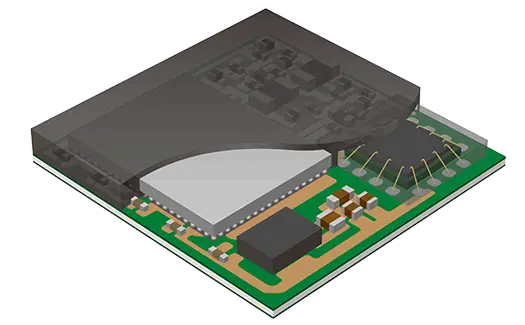
Have you ever wondered what makes your phone so smart? It is all thanks to a tiny piece of technology called a semiconductor. This guide breaks down how these microscopic marvels run our world. It is worth reading because understanding this technology gives you a huge advantage in modern manufacturing. Whether you are cutting metal or building servers, the semiconductor is the boss.
A semiconductor sits right between a true conductor (like copper) and an insulator (like rubber). Because of its unique properties, it can conduct electricity under specific conditions. This forms the absolute bedrock of modern technology. Without the semiconductor, the digital age simply would not exist. A semiconductor acts as the brain for almost everything we use.
We often use a semiconductor material like silicon to build the foundation of every microchip. Engineers take pure silicon and dope it with other elements to change how it behaves. This creates the basic building blocks of all electronic devices. The semiconductor is a true marvel of science.
When you make semiconductors work, you control the flow of electrons. By doing this, a tiny piece of silicon can act as an amplifier or a digital switch. This simple ability is what allows a computer to process data and display it on your monitor. Every single semiconductor plays a vital role in our lives.
How do semiconductors enable compute power in our electronic devices?
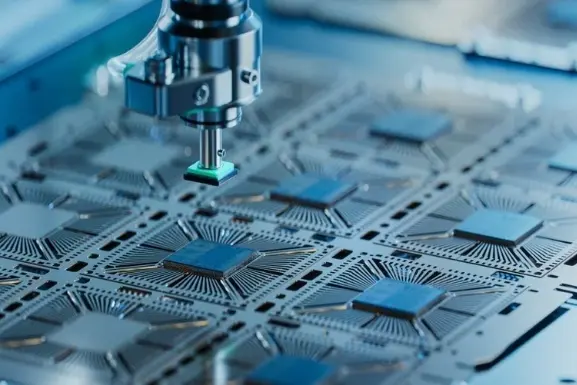
Semiconductors enable the massive compute power we rely on every day. They form the core of every laptop, allowing it to run complex software. These components are carefully arranged into a complex integrated circuit. The semiconductor gives life to the machine.
Inside these devices, billions of tiny switches work together. They control the electrical current to represent the ones and zeros of computer code. This intricate circuit gives your machine the ability to process information instantly. A semiconductor circuit is truly amazing.
From large computing systems to small home appliances, semiconductors power it all. They turn raw electrical energy into useful actions. Think about it: a computer without a chip is just a heavy box of metal and plastic. That is why the semiconductor is so incredibly important today.
How are chips are made inside a modern fab through fabrication?
You might wonder how chips are made. It happens in a massive facility called a fab. The semiconductor manufacturing process, known as fabrication, is incredibly complex. It requires the cleanest environments on Earth to make a perfect semiconductor.
The semiconductor journey begins with a large, flat slice of silicon called a wafer. Through a process called photolithography, light is used to draw a tiny circuitry map onto the wafer. Then, harsh chemicals etch the unwanted material away, leaving only the desired pathways on the semiconductor.
This cycle repeats many times to build layers. Once finished, the wafer is sliced into individual chips. This entire semiconductor industry process relies heavily on an intricate supply chain and a highly skilled workforce. A single semiconductor fab can cost a billion dollars to build! While Drillstar focuses on Solid Tungsten Carbide Rods for cutting metal, the precision required in a fab is similarly mind-blowing.
What role does the transistor play in how semiconductor technology functions?
The transistor is the most important invention of the 20th century. It is the core of all semiconductor technology. These tiny devices act as switches, turning electrical signals on and off billions of times per second inside a semiconductor.
A single chip can contain over fifty billion transistors. Another transistor is added to the design constantly to increase speed. Every transistor works together to form logic gates, which are the basis of computer science. As each transistor shrinks to the nanoscale, the semiconductor becomes faster and more efficient.
A tiny transistor can also be used as an amplifier for radio frequency signals. You find a transistor in everything from a basic diode to complex semiconductor devices like a microprocessor. The relentless shrinking of the modern transistor drives the entire semiconductor field forward.
How are smartphones and the internet of things driven by specialized chips?
Your daily life is filled with consumer electronics like smartphones and tvs. These gadgets rely on specialized semiconductor chips to run their unique operating systems. For example, your phone uses a specific semiconductor chip to connect to cellular networks and process high-quality imaging.
The internet of things (iot) is another massive area of growth for the semiconductor. It connects everyday items to the internet. Smart home appliances use a tiny ic to communicate with your home network. This connectivity makes our lives easier and more automated, all thanks to the semiconductor.
Many of these devices use application-specific integrated circuits or asics. These are semiconductor chips designed for one exact job, like running a sensor in a smart thermostat. They are highly efficient and very cheap to produce in bulk. When we manufacture aTriple-Blade (3-Flute) End Mill to machine aluminum phone bodies, we see how the semiconductor drives the hardware design.
Why are advancements in semiconductor technology crucial for artificial intelligence and ai?
The field of artificial intelligence requires mind-boggling amounts of data processing. Advancements in semiconductor technology are exactly what makes this possible. Specialized ai chips are built specifically to handle complex neural networks. The semiconductor is the true brain behind ai.
When a system runs machine learning algorithms, it needs immense compute power. Standard computer chips simply cannot keep up with ai. We now see breakthrough designs in semiconductor architecture focused purely on accelerating ai workloads. Every new ai model demands a better semiconductor.
These high-end semiconductors enable things like real-time language translation and advanced predictive ai models. As ai continues to evolve, the demand for incredibly powerful semiconductor hardware will only skyrocket. Future ai will rely entirely on the next generation of the semiconductor.
How does research and development push the boundaries of productivity in the semiconductor industry?
The semiconductor industry thrives on continuous innovation. Heavy investment in research and development allows engineers to find new ways to pack more power into a smaller semiconductor space. This constant push dramatically boosts global productivity.
We are seeing a shift toward exploring a new semiconductor material beyond silicon. Researchers are looking for a semiconductor that handles heat better or a switch that moves faster. This is vital for creating high-performance semiconductor systems that do not overheat.
Every new generation of a semiconductor brings a massive leap in what machines can do. This drives economic growth across all sectors. From pcs to medical equipment, a better semiconductor chip means better results for everyone. When a shop uses our Carbide Drills to make parts for these machines, they see the demand firsthand.
| Technology Area |
Semiconductor Impact |
| Computing |
Enables massive compute power |
| Communication |
Drives wireless networks |
| Transportation |
Controls electric vehicles |
What impact does wireless connectivity and iot have on semiconductor design?
The rise of wireless technologies has completely changed how we design an integrated circuit. Devices must now communicate constantly without draining the battery. This means the semiconductor must be incredibly power-efficient.
In the world of iot, a tiny sensor might need to run for years on a single coin battery. Engineers must create ics that sleep deeply and wake up quickly to transmit data. This requires mastering both the physical circuit and the electrical properties of the semiconductor material.
Whether it is a satellite in orbit or a smart lock on your front door, technologies like Bluetooth and Wi-Fi depend entirely on these low-power semiconductor devices. A tiny semiconductor makes wireless communication seamless.
How are automotive innovations relying on new semiconductor chips?
The automotive sector is undergoing a massive transformation thanks to the semiconductor. Modern cars are essentially rolling computers. Electric vehicles rely heavily on a power semiconductor to manage battery output and motor efficiency.
Furthermore, advanced driver-assistance systems use complex circuits and devices to navigate the road. They process data from cameras and radar in real-time. This requires a very powerful computer hidden inside the dashboard, powered by a semiconductor.
As we move toward fully autonomous driving, the demand for semiconductor chips in cars will explode. They are no longer just mechanical machines; they are defined by the modern electronics and the semiconductor inside them. Using a Cemented Carbide Insert to machine engine blocks is still vital, but the car’s soul is now digital.
How will future compute models and chips shape our world?
Looking ahead, the future of the semiconductor is absolutely thrilling. We are exploring radical concepts like quantum computing, which could solve problems current computers cannot touch. This will require entirely new types of circuits and devices based on advanced semiconductor principles.
We are also focusing on sustainable materials and greener ways to run a semiconductor fab. Renewable energy systems, like solar panels and wind turbines, also rely heavily on an efficient power semiconductor to convert and store energy.
At the end of the day, the semiconductor industry is the bedrock of modern technology. From the simplest laptop to the most complex ai server, the tiny semiconductor will continue to drive human progress, innovation, and productivity for decades to come.
Summary:
- A semiconductor controls electrical current, forming the basis of all modern electronics.
- The transistor acts as a tiny switch, and billions of them are packed onto a single chip.
- Fabrication happens in a highly clean fab, etching tiny pathways onto a silicon wafer.
- Advancements in semiconductor technology are directly responsible for the boom in ai and machine learning.
- From electric vehicles to smartphones, every major industry relies completely on a continuous supply of the semiconductor.