The latest innovations in cold heading dies and tools are focused on longer die life, higher forming precision, lower scrap rates, faster tool changeover, and more predictable mass production. The most important developments include advanced carbide materials, duplex surface treatments, next-generation PVD coatings, precision heat treatment, modular die construction, FEM simulation, digital inspection, and data-driven tool condition monitoring.
For fastener manufacturers, these innovations matter because cold heading dies are no longer simple consumable parts. They directly affect dimensional consistency, production uptime, forming stability, tooling cost, and final product quality.
Quick Answer: Key Innovations in Cold Heading Tooling
| Innovation |
What It Improves |
Why It Matters |
| Advanced tungsten carbide grades |
Wear resistance and impact strength |
Longer die life under high pressure |
| Duplex coatings |
Surface hardness and fatigue resistance |
Better protection against galling, cracking and abrasion |
| PVD and PACVD coatings |
Lower friction and higher wear resistance |
More stable forming of steel, stainless steel and aluminum |
| Vacuum heat treatment |
Dimensional stability and hardness consistency |
Better repeatability across tooling batches |
| Plasma nitriding |
Surface hardness and load support |
Stronger base layer for coated dies |
| Modular die design |
Repairability and cost control |
Damaged inserts can be replaced instead of replacing the full die |
| FEM forming simulation |
Die stress, forming defects and press load prediction |
Faster tool development and fewer trial runs |
| Precision inspection |
Tolerance control and traceability |
Supports high-volume automotive and aerospace fastener production |
| Smart monitoring |
Predictive maintenance |
Reduces unexpected tool failure and downtime |
1. Advanced Carbide Materials for Higher Die Life
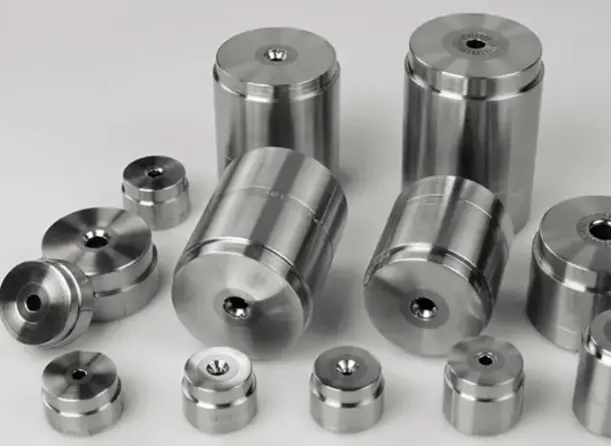
Tungsten carbide remains one of the most important materials for cold heading dies because it offers high hardness, compressive strength and wear resistance. The innovation is not simply “using carbide,” but selecting carbide grades more precisely for each forming condition.
Modern cold heading tooling increasingly uses optimized carbide inserts, carbide nibs, carbide punches, extrusion pins and segmented carbide die components. These are selected according to part geometry, forming pressure, impact load, material flow and expected production volume.
For high-strength bolts, automotive fasteners and special-shaped components, carbide selection has become a process engineering decision rather than a basic material choice.
2. Duplex Surface Treatments: Nitriding Plus Coating
One of the most important trends is the use of duplex surface engineering. This usually combines plasma nitriding or another surface hardening process with a PVD coating.
The nitrided layer provides load support and improved surface hardness. The PVD coating then reduces friction, galling and abrasive wear. This combination can be especially useful for cold forging, extrusion, trimming, piercing and forming of difficult materials.
However, duplex coating must be matched to the actual failure mode. If the main problem is cracking or fatigue rather than wear, coating selection, nitriding depth, die geometry and stress concentration must be reviewed together.
3. Next-Generation PVD Coatings for Cold Forming
Modern PVD coatings are becoming more application-specific. Instead of using standard TiN or TiCN coatings for every job, manufacturers now select coatings based on workpiece material, lubrication condition, forming load and failure mechanism.
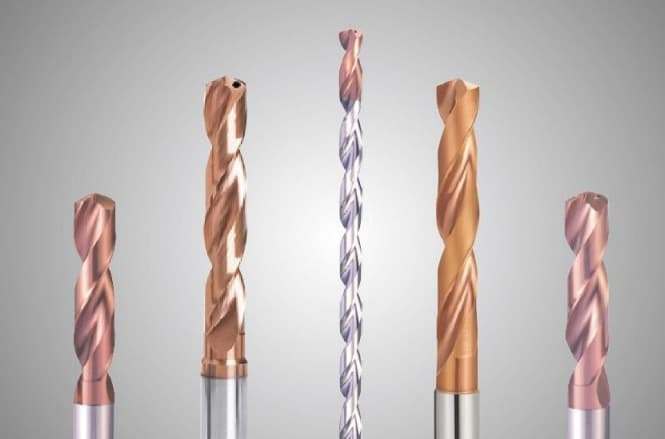
For demanding cold forming applications, coating suppliers are promoting coatings with high hardness, low friction and better resistance to mechanical fatigue. These coatings are used for cold forging, fine blanking, forming of stainless steel, advanced high-strength steel and thicker low-carbon steel parts.
The practical benefit is lower friction, less adhesive wear, improved product surface quality and longer intervals between tool changes.
4. Precision Heat Treatment and Cryogenic Processing
Cold heading dies fail not only because of surface wear, but also because of poor heat treatment control, internal stress, insufficient toughness or dimensional instability.
Recent process improvements focus on:
- Vacuum heat treatment
- Controlled tempering
- Cryogenic processing
- Stable hardness distribution
- Reduced distortion
- Improved carbide-to-steel interface performance
For buyers, this means die quality should be evaluated by the whole manufacturing chain, not only by hardness value or carbide grade.
5. Modular and Replaceable Die Designs
Another important innovation is modular die construction. Some modern header dies use interchangeable carbide nibs, segmented die structures, replaceable inserts, reusable cases, double hoops or triple hoops.
This design approach reduces total tooling cost because only the worn or damaged element needs to be replaced. It also shortens downtime and helps manufacturers standardize tooling maintenance.
For high-volume production, modular die design can be more valuable than a small increase in initial die life because it improves repairability and production continuity.
6. FEM Simulation for Cold Heading Process Optimization
Finite element simulation is now a major tool in cold heading die development. Software for cold forming and forging simulation can help predict:
- Material flow
- Folding or cracking risks
- Die stress concentration
- Punch load
- Press capacity requirements
- Tool deflection
- Pre-stressed die behavior
- Elastic springback
- Tool wear and life risk
This reduces trial-and-error tooling development. For complex fasteners, multi-station cold forming parts and high-strength materials, simulation can shorten development time and improve first-batch success.
7. Digital Inspection and Traceability
Cold heading tooling is moving toward tighter measurement control. Precision manufacturers increasingly use CNC grinding, EDM, coordinate measurement, optical inspection, laser scanning and SPC-ready gaging systems.
This is important because small variations in die geometry can create large differences in fastener head shape, recess accuracy, concentricity, thread preparation and final assembly performance.
For aerospace, automotive and medical fastener applications, traceable inspection is becoming part of the tooling value proposition.
8. Smart Manufacturing and Tool Condition Monitoring
Smart monitoring is still emerging, but it is becoming more relevant. The direction is clear: collect process data from machines, tooling, inspection systems and production output, then use that data to predict die wear, identify abnormal forming loads and schedule maintenance before failure.
In practical terms, this may include:
- Real-time process data collection
- Machine vision inspection
- Tool wear tracking
- MES integration
- Digital twin simulation
- Predictive maintenance dashboards
The goal is not only longer tool life. The bigger value is stable production, fewer unexpected stoppages and better quality control.
How to Choose Innovative Cold Heading Dies and Tools
When selecting cold heading dies and tools, buyers should ask suppliers about:
- Carbide grade and tool steel selection
- Heat treatment process
- Surface coating options
- Nitriding or duplex treatment availability
- Tolerance capability
- EDM and grinding precision
- Modular repair design
- Inspection equipment
- Experience with similar fasteners
- Failure analysis and redesign support
A high-quality supplier should be able to explain why a die failed, not just provide a replacement.
Conclusion
The latest innovations in cold heading dies and tools are moving the industry from experience-based tooling toward engineered, measurable and data-driven production. The strongest developments are advanced carbide materials, duplex coatings, precision heat treatment, modular die construction, simulation-based design and digital inspection.
For fastener manufacturers, the best tooling strategy is not simply buying harder dies. It is matching die material, coating, heat treatment, geometry, lubrication, machine condition and inspection data into one controlled process.
FAQ
What is the most important innovation in cold heading dies?
The most important innovation is the shift toward system-level tooling design, combining carbide material selection, heat treatment, coating, simulation and inspection instead of optimizing only one parameter.
Are coated cold heading dies better than uncoated dies?
Often yes, especially when wear, galling or friction is the main failure mode. But coating must match the material, load and die geometry. Poorly matched coatings can fail early under fatigue or cracking conditions.
Why are carbide dies widely used in cold heading?
Carbide dies offer high compressive strength, hardness and wear resistance, making them suitable for high-volume fastener production under extreme forming pressure.
How does simulation help cold heading tooling?
Simulation helps predict material flow, forming defects, die stress, press load and tool life risk before physical trials. This reduces development time and tooling waste.
What should buyers look for in a cold heading tooling supplier?
Buyers should look for material expertise, coating options, precision manufacturing, inspection capability, failure analysis support and experience with similar fastener applications.