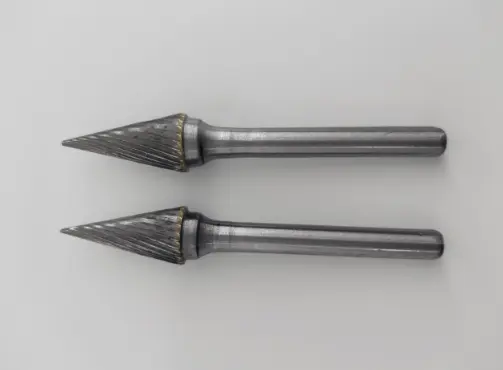
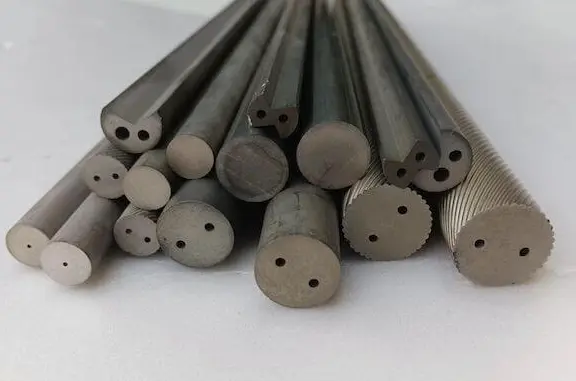
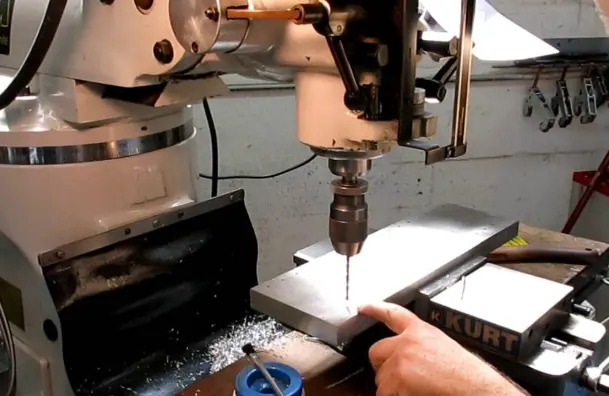
Currently, the global high-end manufacturing industry’s demand for high-precision, high-performance components continues to rise, forcing a disruptive paradigm shift in modern materials processing technology. Traditional machining methods are constantly iterating and upgrading, with full-chain processing technologies covering subtractive, equal-material, and additive manufacturing accelerating their evolution towards intelligence, greening, and ultra-precision, becoming a key benchmark for measuring the hard power of a country’s industry and its core competitiveness in high-end manufacturing. Among these, the breakthrough development of deep hole machining technology, coupled with the improvement of multi-dimensional materials processing systems, is comprehensively reshaping the global advanced manufacturing development landscape.

As a core extreme manufacturing technology in cutting-edge fields such as aerospace, oil drilling, and large-scale defense equipment, deep hole machining (the machining of special holes with an aspect ratio greater than 5 to 10) has long been a technological blind spot and a major challenge in industrial manufacturing. Due to the fully enclosed processing area, three major problems—poor chip removal, difficulty in heat dissipation, and insufficient tool rigidity—have long constrained the efficiency, accuracy, and finished product quality of deep hole machining. To address industry pain points, the industry has developed three mature and complementary mainstream machining technology systems, precisely covering all deep hole machining scenarios.
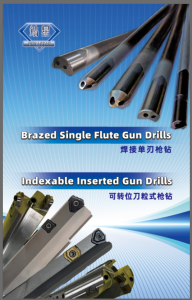
According to industry technical data, the gun drilling system is primarily designed for machining small-diameter deep holes (Φ2-Φ30mm). Leveraging its single-edge external chip removal structure and ultra-high straightness, it precisely overcomes the challenges of poor precision and numerous defects in micro-deep hole machining. The BTA drilling system, based on the core principle of single-tube internal chip removal and high-pressure fluid injection, has become the core force for efficient machining of medium-to-large-diameter deep holes (Φ25mm and above). The jet-suction drilling and DF systems utilize jet push-pull technology to achieve breakthroughs in machining extremely deep, large-diameter holes and special, difficult-to-machine materials. Simultaneously, the widespread application of 1-10MPa high-pressure cooling systems and precision pilot-hole processes, combined with the scientific parameter matching of “small diameter, high speed, low feed,” completely solves common defects in traditional deep hole machining such as tool breakage and workpiece surface scratches, significantly improving machining stability and yield.
This leapfrog innovation in deep hole machining technology is a vivid microcosm of the upgrading of the modern materials processing industry. Currently, global industry has established a comprehensive intelligent manufacturing matrix encompassing four dimensions: subtractive manufacturing, equal-material manufacturing, additive manufacturing, joining, and surface modification, fully unleashing the benefits of high-end manufacturing. In subtractive manufacturing, traditional CNC cutting technology for hardware continues to be optimized, while special processing technologies such as EDM, wire cutting, and waterjet machining are maturing, making the refined processing of high-hardness, high-toughness, and difficult-to-machine materials commonplace. In equal-material manufacturing, processes such as precision casting, plastic forging, and powder metallurgy are constantly iterating, significantly improving the mechanical properties and service life of components by optimizing the microstructure of materials.
Additive manufacturing technology further breaks through the constraints of traditional manufacturing. High-energy beam deposition processing technologies such as selective laser melting (SLM) completely eliminate the limitations of mold processes on product structures, enabling the integrated molding of complex and irregular structures, significantly reducing production processes and manufacturing costs. Furthermore, the innovative application of joining and surface modification technologies such as laser welding, friction welding, and laser surface hardening effectively enhances the wear resistance, corrosion resistance, and stability of components, comprehensively improving the overall quality of core components in high-end equipment.
Based on the future development of the industry, the competitive landscape of modern materials processing technology has been comprehensively upgraded, with green and low-carbon development and micro-nano precision becoming the two core themes of the industry’s second phase of development. Industry development is no longer limited to the precise shaping of parts, but also considers low-carbon environmental protection and breakthroughs in microscopic precision. High-energy beam processing technologies, with lasers and electron beams at their core, are propelling semiconductor chip and microelectromechanical systems (MEMS) manufacturing into the era of nanoscale ultra-precision, providing core support for the iteration of high-end electronics and intelligent equipment industries.
In the field of green intelligent manufacturing, green processing technologies such as dry cutting and micro-volume lubrication (MQL) are gradually replacing traditional high-energy-consuming and high-polluting processing modes. Coupled with AI intelligent monitoring systems, these technologies enable tool wear prediction and intelligent control of process parameters, successfully bridging the gap between intelligent manufacturing and green manufacturing, becoming a core strategic direction for global manufacturing enterprises to transform and upgrade and seize industry leadership.
Technological iteration continues, and intelligent manufacturing upgrades are ongoing. Every breakthrough and innovation in materials processing technology forms a solid foundation for the development and implementation of high-end equipment manufacturing and major national projects. As various technological barriers continue to be broken down, a new material processing system that is efficient, precise, low-carbon, and intelligent is becoming increasingly sophisticated, marking the official entry of the world’s advanced manufacturing industry into a new stage of high-quality development.