This comprehensive guide is worth reading because investing in heavy industrial equipment demands an exact understanding of mechanical limits and capabilities. Whether you manage a sprawling, high-volume production floor or just need to reliably hit a tight tolerance on a critical prototype, knowing exactly how a cutting implement interacts with raw metal will save your business thousands of dollars in scrapped parts. We will break down every critical mechanical aspect to ensure you select the absolutely perfect setup for your shop floor.
What exactly is a lathe machine and how does the machine shape the workpiece?
A lathe is typically a foundational piece of equipment used to shape a piece of material by spinning it rapidly. The fundamental mechanical principle is brilliantly simple yet incredibly highly effective. The workpiece firmly rotates on an axis of rotation, while a fixed tool carefully moves against it. This classic lathe operation efficiently removes metal to form perfectly round, uniform items.
From the tiny, bench-mounted setups utilized by an amateur hobbyist in a home garage to the massive, multi-ton floor-standing configurations designed for heavy industrial applications, the core function remains absolutely identical. You securely clamp a heavy metallic block, spin it at high speeds, and use a sharp implement to shave off the excess material. You might use a stationary cutting tool to cut the outside profile, or utilize a heavy drill to bore out the hollow center perfectly.
Understanding this aggressive, physical interaction between the rapidly rotating material and the stationary structure is the absolute foundation of modern industrial manufacturing. Every single time the spindle turns, it creates metal chips and generates intense thermal heat. The entire structural system must be robust enough to handle these extreme physical forces without flinching, guaranteeing that your final metallic parts come out perfectly dimensioned every single time.
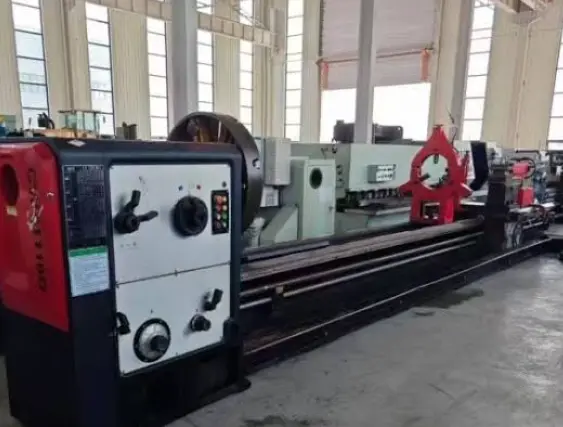
In the distant past, traditional lathes always required a highly skilled human machinist to manually turn wheels, read analog dials, and make tedious micro-adjustments by hand. Today, advanced computer numerical control has completely taken over the modern shop floor. A modern cnc lathe reads a highly specific, mathematical set of instructions—universally known as G-code—to fully automate the entire machining process seamlessly.
During automated cnc turning, the powerful onboard computer actively dictates the exact toolpaths required for the specific job. This intelligent software guides the precise movement along the different axes with pinpoint accuracy that a human hand simply cannot replicate. A specific cnc lathe can run all day and all night aggressively, churning out hundreds of identical machined parts without ever suffering from fatigue, distraction, or losing focus.
This incredible level of digital automation is exactly what makes modern cnc machines so incredibly valuable for large-scale production runs. The machine operator simply loads the raw bar stock, presses a green start button, and watches the equipment flawlessly execute the programming. The technology drastically reduces human error, lowering scrap rates and making the floor an unstoppable production powerhouse.
Why is understanding every specification crucial before you buy a lathe?
Before you even think about looking at a shiny new catalog, you absolutely must understand your own daily production needs. You have to meticulously check the maximum diameter and length of the workpiece you plan to cut. The physical distance between centers dictates the absolute maximum length of the workpiece you can safely mount and process. If you purchase equipment that is too short, you simply cannot do the job and will have to turn away lucrative contracts.
Another incredibly critical specification is the spindle bore size. This hollow hole running straight through the inside of the main drive determines the maximum thickness of raw bar stock you can slide completely through the head. Furthermore, you also need to look deeply at the maximum spindle speed. Faster rotational speeds provide a significantly better surface finish on smaller items, while much higher low-end torque is strictly required for roughing larger diameter materials.
Making the correct choice directly prevents you from being mechanically limited on future, potentially profitable jobs. You never want to tell a loyal customer that your shop lacks the basic capacity to handle their parts. Knowing these physical numbers helps you confidently choose the right equipment without second-guessing your heavy investment.
The headstock is undeniably the absolute beating heart of any turning center. The main drive always lives securely inside the massive iron headstock (or sometimes dual headstocks in advanced twin-spindle setups). This vital drive is fully supported by a set of incredibly massive, high-precision roller bearing components. If this specific bearing is cheap, damaged, or slightly worn, your metal will chatter violently, and you will absolutely never hold a tight tolerance.
On the exact opposite end of the heavy cast-iron bed sits the tailstock. When you have unusually long workpieces or a slender, flexible shaft, the aggressive cutting pressure will naturally cause the metal to bend away from the insert. The adjustable tailstock presses firmly against the far end to keep the part perfectly straight and rigid. The quill usually accepts heavy tooling using a standard Morse taper, allowing you to easily and quickly swap out live centers or a large taper drill.
At Drillstar, we manufacture high-performance tooling that demands supreme stability. Using advanced inserts on our CD Texture Cutter (Diamond Turning Tool) requires a flawless mechanical drive to achieve a perfect, optical-grade mirror finish that strict clients demand.
A basic turning center fundamentally operates on just two basic axes: the X and Z axes. The Z-axis moves left and right along the length of the heavy iron bed, while the X-axis moves in and out to precisely control the profile. The heavy carriage and the adjustable cross slide mechanically handle this fluid, back-and-forth motion with incredibly smooth linear rails.
However, modern CNC lathe machining gets significantly more advanced than simple two-dimensional movement. By adding a programmable c-axis, the main drive can actually stop spinning, lock into a rigid place, and rotate to incredibly precise, indexed angles just like a rotary table. You can even add driven, live implements to actively mill features directly onto the stationary part.
This incredible multi-axis capability allows you to produce highly complex parts in one single, uninterrupted setup. You completely avoid the tedious need to manually move the metal over to a separate milling center. This saves massive amounts of cycle time and drastically improves your overall dimensional accuracy since the part is never unclamped.
A highly stable setup is a highly profitable setup. Machine rigidity refers directly to how well the heavy cast-iron frame actively absorbs natural vibration during extremely heavy cuts. If the frame of the setup slightly flexes, the insert will uncontrollably bounce against the spinning material. This destructive chatter drastically reduces lifespan and almost always causes catastrophic tool breakage.
To combat this, premium builders use massive, single-piece cast-iron beds. Some even fill the hollow cavities with specialized polymer concrete. This extra mass acts like a giant sponge for vibrations. When you are cutting much harder materials like forged titanium, hardened tool steel, or aerospace Inconel, absolute rigidity is non-negotiable. A flimsy, lightweight base simply cannot handle the immense cutting pressure. It will quickly destroy your expensive precision carbide inserts and ruin the metallic block.
At Drillstar, we always strongly advise our clients to ensure their structural base is built properly. For instance, successfully running our aggressive, heavy-duty Indexable BTA Drill Series straight into a solid block of steel requires immense structural stiffness to keep the cut perfectly straight.
Choosing the right lathe: Manual lathes vs. high-end CNC machines?
Are manual lathes officially dead? Absolutely not. For quick shop repairs, simple maintenance jobs, or turning a fast, one-off prototype, a reliable manual setup is very often much faster to configure than writing completely new g-code for a complex automated center. Traditional technical schools still use them extensively every single day to teach the fundamental, tactile basics of metalworking to a brand new machinist.
However, for serious, high-volume manufacturing environments, you absolutely must invest in high-end cnc equipment. Modern automated setups are explicitly designed for incredible volume, speed, and flawless repeatability. If you consistently have production runs of hundreds or thousands of identical parts, hand-turning is simply entirely too slow and highly prone to human error.
Selecting the proper technology always depends entirely on your specific daily production volume. If you just tinker in a garage, a hand-cranked setup is perfect. If you supply massive international manufacturing companies, automated technology is the absolute only acceptable answer.
What are the common mistakes buyers make when looking for a lathe?
The most common mistakes usually revolve around severely underestimating future business growth. Eager buyers often look for smaller lathes to simply save a few feet of valuable floor space, only to painfully realize a few months later that they cannot physically hold larger workpieces. They often completely forget to verify if the drive motor actually has enough horsepower for aggressive, heavy roughing passes in tough alloys.
Another huge error is entirely ignoring strict, industry-specific needs. If you ever plan to manufacture components for strict aerospace and medical sectors, such as tiny, delicate titanium medical devices, you absolutely need extreme thermal stability and very high RPMs. A massive, slow-turning oil-field setup will simply not work for those delicate precision components.
Always procure a setup that slightly exceeds your current demands. You want a system that allows your business to comfortably grow, expand its capabilities, and take on new challenges, rather than a system that constantly holds your true potential back due to physical limitations.
How does workholding secure your workpiece during turning?
Proper workholding is the most critical mechanical link between the powerful motor and the raw material. The most universally common device is the heavy steel chuck. This heavy device mounts directly to the nose of the drive and uses three or four heavy steel jaws to aggressively crush down and grip the piece of metal incredibly securely.
If your clamping pressure ever fails at five thousand RPM, the heavy material instantly becomes a deadly, high-speed projectile. For very delicate, thin-walled cylindrical parts, standard hydraulic jaws might actually crush and permanently deform the material. In those highly sensitive cases, you carefully switch to custom-machined soft jaws or a high-precision collet system that distributes the clamping force evenly.
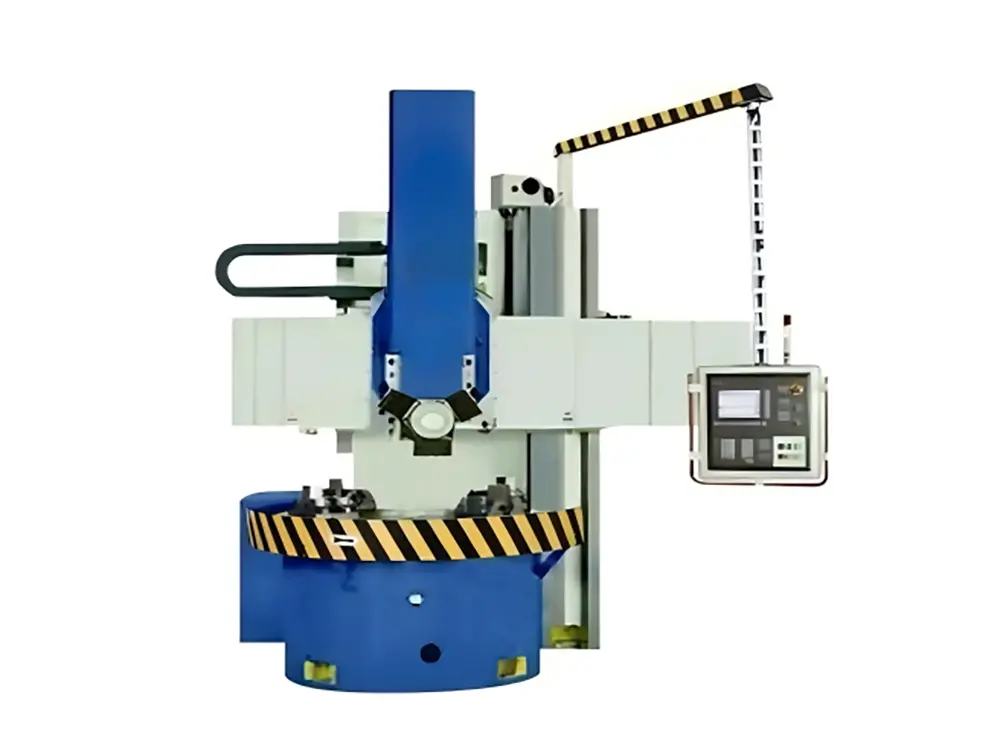
Reliable clamping ensures the workpiece you can turn stays perfectly centered and fixed within the jaws throughout the entire process. Reliable operations often require a strong, vertical center of gravity, like the robust configurations utilized on our heavy-duty Vertical Lathe machines.
Ultimately, the massive iron structure just spins the metal; it is the tiny cutting tool that does the actual, physical work of removing chips. On older, traditional configurations, a manual tool post holds just a single implement at a time. On a modern, automated system, a rapidly rotating tool turret can easily hold a dozen different cutters, seamlessly switching between them in mere fractions of a second.
The sharp edge aggressively pushes into the spinning workpiece to create the exact desired shape. You might actively use a tough, roughing insert to rip away bulk material quickly, and then smoothly switch to a razor-sharp finishing edge to accurately hit a tight specification. The heavy iron is essentially helpless without high-quality cutting implements.
Using premium, high-quality inserts is the absolute only way to ensure your machined parts consistently meet the customer’s strict demands. You need the right Cemented Carbide Insert to keep the edge cutting sharply and cleanly without wearing down prematurely or leaving a poor surface finish.
Summary: Critical Points to Remember Before Investing in Equipment
Navigating the complex world of industrial manufacturing machinery is difficult, but focusing on the core mechanical fundamentals makes the purchasing process significantly easier. Here are the most vital takeaways to keep in mind when outfitting your shop floor:
- Know Your Size Limits: Always check the maximum diameter and length the setup can handle. Do not buy a lathe that is too small for your future manufacturing contracts.
- Prioritize Machine Rigidity: A heavy, solid cast-iron base stops vibration, greatly extends the life of your cutting tool, and prevents costly, catastrophic tool breakage.
- Understand Spindle Specs: The spindle bore dictates your maximum bar stock size, while the RPM affects your surface finish. Good bearings are absolutely vital for hitting a tight tolerance.
- Workholding is Crucial: Whether you use a standard clamping device or custom soft jaws, securing the material properly prevents severe accidents and scrapped parts during operations.
- Automation vs. Manual: Use manual configurations for quick repairs and prototype work, but always rely on a cnc lathe for high-volume, automated production runs.
- Tooling Makes the Part: The most expensive motor in the world is utterly useless without a sharp edge. Invest in high-quality solid carbide tooling to maximize your floor’s true potential.