You push a button. The massive ram descends. Instantly, a rough, unfinished hole transforms into a perfect, shining gear. That is the magic of modern manufacturing. If you cut metal for a living, you know that shaping perfect internal profiles is notoriously difficult. But with the right machine, the impossible becomes easy. This article explores how to conquer your toughest jobs using a hydraulic powered deep hole broaching machine and heavy-duty vertical broaching machine setups. We will pull back the curtain on the machinery, the incredible power of the hydraulic cylinder, and why investing in the correct broach setup guarantees a flawless finish every single time. Read on to unlock the secrets of speed and accuracy!
What exactly is a broach and how does this machine work?
Broaching is a machining process that provides incredible speed and pinpoint accuracy. Essentially, it is a machining process that uses a highly specialized, toothed tool called a broach. When a shop needs to rapidly remove material in a single stroke, this machine is the ultimate answer.
Broaches are used to create a specific, complex shape instantly. Unlike traditional turning or milling, where a single point slowly carves the metal, a broach does everything at once. Broaching excels at mass production. If you need to make ten thousand identical gears, broaching is often the preferred method. It is primarily used to create exact internal or external profiles in seconds.
The tool carves a specific geometry directly into the metal. The broach features multiple cutting teeth, each one slightly larger than the last. As the machine pushes or pulls the tool, it slices away metal progressively. This makes the machine incredibly efficient.
How do you find the right supplier for a heavy-duty machine?
Buying a massive piece of machinery isn’t like buying a standard drill or a benchtop mill. You are making a huge investment in your production line. A top-tier supplier will take the time to analyze your exact workpiece and recommend an ideal broaching setup.
The right broaching solution depends entirely on your material. Are you cutting soft aluminum or a tough, heat-resistant aerospace alloy? Make sure the supplier understands the exact dimensional tolerance you need. An expert partner will guide you toward the perfect machine. They help you decide between a massive hydraulic deep hole broaching machine and a smaller, more nimble setup.
Always ask questions. Does the supplier offer local support? Can they provide customized tools? A great vendor ensures your machine runs non-stop, preventing costly downtime.
Why upgrade to a modern hydraulic broaching machine?
Older equipment simply cannot keep up with today’s production demands. Modern broaching machines are designed to handle extreme force without flinching. A modern broaching machine uses advanced hydraulics to generate massive, smooth power.
A hydraulic system provides consistent pulling or pushing force. Usually, a massive hydraulic cylinder drives the main ram. This modern machine uses fluid power to ensure there is zero chatter or vibration during the cut. Whether you run horizontal or vertical setups, these advanced machines offer unyielding rigidity.
You can even configure the machine for continuous broaching to dramatically drop your cycle time. Compare this to older machine tools or traditional milling machines; the speed is absolutely unbeatable. You save time, you save money, and your parts come out perfect.
The broach tool itself is an absolute engineering marvel. It features distinct rows of teeth. As you look down the tool, each tooth is slightly taller than the one before it. This gradual step-up is known as the rise per tooth.
During just one pass of the broach, the extra material is removed cleanly. Broaches are designed to cut gradually. They blend the roughing and finishing steps into one single, powerful motion. A highly precise cutting edge dictates the final shape. These tough tools are used to cut standard keyways, custom internal keyways, and complex gears.
Broaching works best when engineers calculate the exact amount of material removed per tooth. You also need a rigid tool holder to securely keep the teeth and the workpiece aligned perfectly. Without this rigidity, the tool will deflect, and the part will fail.
What type of broaching best fits your production line?
Deciding on the correct type of broaching is critical for your factory’s success. A machine shop facing heavy, varied demand will frequently test different broaching methods to find the optimal process. You must carefully match the specific broaching technique to the part you are manufacturing.
Sometimes, standard high-speed steel is enough. Other times, the cutting tool might require a special titanium coating for extended tool life. Do you need to cut a simple slot or a complex helical gear? The answer dictates your setup.
Understanding your specific needs helps you optimize the machine layout. It ensures you never buy more machinery than you actually need, while still hitting every production target.
How does a rotary broach differ from linear broaching?
There are several ways to drive a tool into metal. In linear broaching, the tool moves in a straight line relative to the workpiece. This involves either standard push broaching or heavy-duty pull broaching.
In contrast, a rotary broach works entirely differently. It wobbles slightly as it spins, slicing the shape into the part. You can easily run a rotary broach on a standard lathe or most standard cnc machines. It is fantastic for small, shallow profiles.
However, whether the workpiece is pushed or pulled, linear methods like a push or pull action demand massive, brute force. This is precisely why horizontal broaching machines and towering vertical machines are built so heavily. Another common variant is a specific type of internal broach used exclusively for blind holes where a pull-through tool cannot reach.
What are the two main types of broaching: internal and surface?
Manufacturers generally categorize the work into two distinct groups. The two main types of broaching are internal and external.
Internal broaching creates shapes, like a spline or a keyway, inside a pre-existing hole. Conversely, surface broaching (also called external broaching) machines the outside profile of a part. Sometimes, engineers mount two slab broaches on the machine to cut both sides of a block simultaneously. This clever technique cuts parallel surfaces on opposite sides perfectly flat at the same time.
You might also see specialized slot broaching setups or unique pot broaches used to cut outer splines on transmission gears. Internal and surface operations handle complex internal and external geometries beautifully. They transform the raw surface of the workpiece into a polished, finished product in one swift motion.
Why is absolute precision critical for hole broaching?
Hole broaching is a totally unforgiving process. If you are cutting a tight spline for an aerospace transmission, the tolerance must be absolutely perfect. This is true precision machining.
When dealing with deep, complex internal features or distinct internal forms, the tool must track perfectly through the exact center of the workpiece. There is no room for wandering. Often, this operation is paired with a heavy-duty cnc deep hole setup.
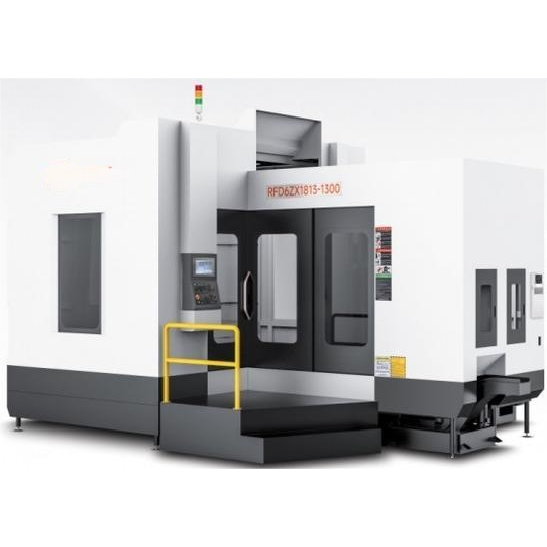
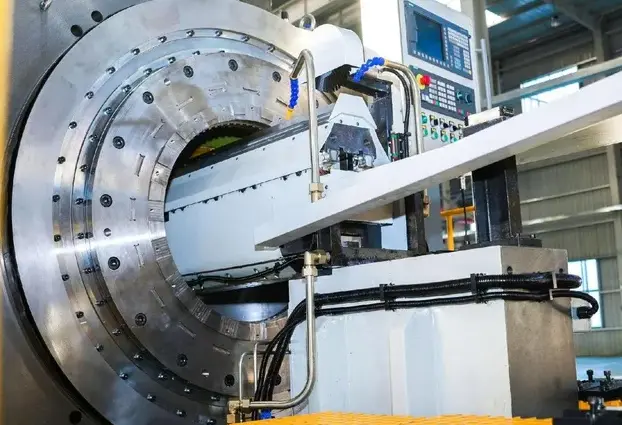
Before the broach enters, a deep hole drilling machine often creates the pilot hole. A precision deep hole gun drill provides the perfectly straight starting point. Then, the deep hole broaching machine steps in to finish the profile. For top-tier hole making, incorporating tools like a six-axis drilling and milling machine ensures the part is perfectly prepped before the final cut.
How do advanced CNC machines enhance the broaching process?
The integration of computers has changed everything. Modern cnc controls add an incredible layer of safety and control to the broaching machine.
Advanced broaching systems now use smart sensors to constantly monitor cutting force. If the tool gets dull, the machine senses the resistance and alerts the operator before a catastrophic crash occurs. In some highly automated setups, multiple broaches are mounted on massive rotary turrets, allowing the machine to swap tools without human intervention.
This level of precision reduces scrap. It guarantees that every single part meets the highest dimensional standards. Furthermore, by pairing a broach with custom deep hole boring tools, a shop can tackle parts that were previously considered impossible to manufacture.
How do you maintain a deep hole broaching machine for maximum uptime?
A deep hole broaching machine is a massive financial investment. Proper maintenance of the machinery is vital to protect your bottom line.
First, keep the hydraulic fluid clean. Dirty oil destroys pumps and valves rapidly. Inspect the machine daily for leaks or loose fittings. A single chipped tooth on a tool can instantly ruin an expensive workpiece. Always monitor the hardness of the steel parts you are cutting. If a batch of raw material is too hard, it will dull your tool instantly and leave a terrible, rough finish.
If you also run other operations, keeping your peripheral tools sharp, like your comma face grooving cutters or your CNC deep hole gun drilling machine, ensures the entire production line flows smoothly. Take care of your equipment, and it will take care of your business.