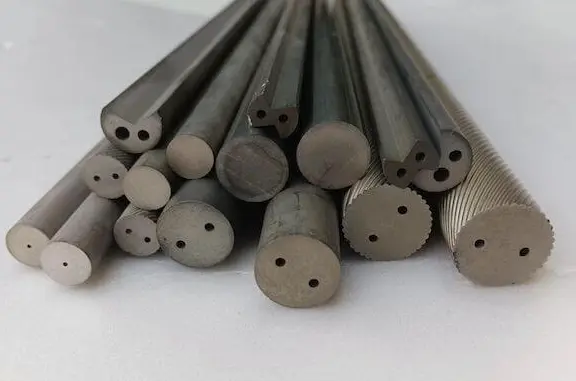
Recently, cemented carbide round bars (commonly known as tungsten carbide bars) have continued to occupy an important application position in core raw material sectors such as precision machining and tool manufacturing due to their excellent comprehensive performance. As a key basic material for industrial manufacturing, cemented carbide round bars, relying on unique material formulations and diverse forming processes, adapt to the production needs of different scenarios, becoming a core material for cutting difficult-to-machine materials and machining precision components. The differentiated advantages of its production process have also attracted much attention from the industry.
According to industry technical data, cemented carbide is a composite material prepared using powder metallurgy technology. It uses a refractory metal compound as the hard phase and a binder metal as the bonding phase. This special material structure endows the product with core performance characteristics. This material is also commonly known as tungsten carbide; the two are essentially the same material, differing only in regional name. Compared to ordinary alloy materials, cemented carbide possesses multiple excellent properties such as high hardness, high wear resistance, high toughness, high temperature resistance, and corrosion resistance, with extremely outstanding performance stability. Even at 500℃, its core hardness remains essentially unchanged, and it maintains high hardness even at 1000℃, perfectly adapting to various demanding industrial machining scenarios.
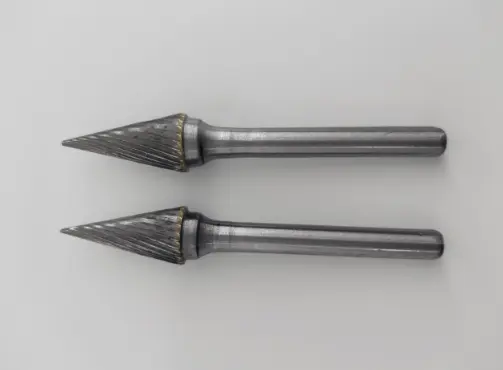
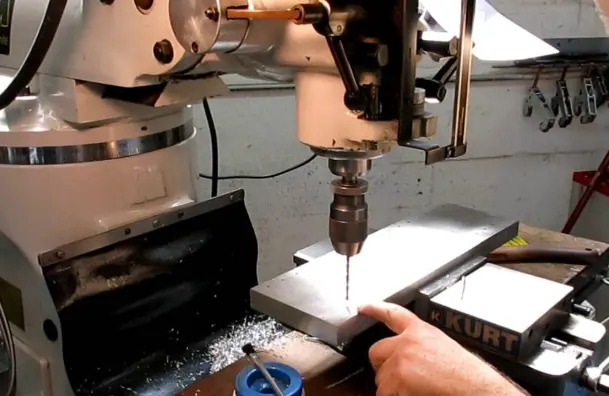
Thanks to its superior performance, cemented carbide round bars have become a mainstream core material for cutting tools, widely used in the production of various cutting tools such as lathe tools, milling cutters, planing tools, drills, and boring tools. They can efficiently cut conventional materials such as cast iron, ordinary steel, non-ferrous metals, plastics, synthetic fibers, graphite, glass, and stone, while also handling various difficult-to-machine materials such as heat-resistant steel, stainless steel, high-manganese steel, and tool steel. They are an indispensable basic material in high-end precision manufacturing and heavy-duty machining fields.

In terms of production processes, the mainstream forming methods for cemented carbide round bars in the industry are currently divided into two main categories: extrusion forming and compression molding. At the same time, isostatic pressing, a high-end forming process, has also emerged. These three processes each have their own specific functions, adapting to different specifications, sizes, and batch production needs.
Among them, extrusion forming is the core production process for long-gauge cemented carbide round bars. This process allows for flexible length cutting during production to meet diverse long bar processing needs. However, due to process limitations, the overall length of the finished product cannot exceed 350mm. Extrusion molding also has drawbacks: a longer overall production cycle, material loss during the end-cutting process for small-diameter round bars (below 3mm), and more pronounced straightness deviations in the blank as the finished product length increases. However, the industry can effectively optimize the straightness and roundness accuracy of the product through subsequent external cylindrical grinding, ensuring finished product quality.
Compression molding is the preferred production process for short-gauge cemented carbide bars. Its core principle is to directly press cemented carbide powder into shape using a specialized mold. Compared to extrusion, compression molding offers significant advantages, achieving one-step molding, greatly reducing scrap rates, simplifying subsequent wire cutting processes, and eliminating the dry material production cycle required for extrusion, thus significantly shortening the overall production time. It is estimated that compression molding can directly shorten the delivery cycle for customers by 7 to 10 days, demonstrating outstanding production efficiency and delivery advantages.

Industry technicians added that, strictly speaking, isostatic pressing belongs to the category of compression molding and is currently the optimal process for producing large-size, long cemented carbide round bars. This process utilizes an upper and lower piston sealing structure, employing a pressure pump to inject a liquid medium between a high-pressure cylinder and a pressurizing rubber. The pressurizing rubber evenly transmits pressure, allowing the cemented carbide powder to be uniformly compressed and shaped from all sides. This effectively solves the problems of insufficient precision and uneven density in the production of large-size, long bars using traditional processes, and it has extremely strong high-end adaptability.

It is understood that the standardized production process for cemented carbide round bars has formed a mature system, relying entirely on specialized equipment for closed-loop operation. After precise proportioning of raw materials, they undergo pretreatment processes such as wet grinding in a ball mill, drying in a drying cabinet, mixing in a Z-type mixer, and granulation in a granulator. Subsequently, they are molded using a side-pressure hydraulic press or extruded using an extruder. After molding, they undergo drying and stress-relieving treatment, and finally, they are degreased and sintered in a degreasing furnace, integrated furnace, or HIP low-pressure furnace, ultimately forming cemented carbide round bar blanks. The entire process precisely controls the product’s density, hardness, and precision.
Industry insiders say that as high-end manufacturing and precision machining industries continue to upgrade, the market’s requirements for the dimensional accuracy, specification diversity, and delivery efficiency of cemented carbide round bars are constantly increasing. In the future, the industry will continue to optimize extrusion, molding, and isostatic pressing processes, address various process shortcomings, further improve product performance and production efficiency, and provide solid material support for the high-quality development of downstream industries such as tool manufacturing, precision machinery, and heavy industrial processing.